3 days in Tokyo: the perfect Tokyo itinerary for first-timers

Updated: 3 days ago
Disclosure: This post contains affiliate links. If you click through and make a purchase, we may earn a small commission, ♡ at no extra cost to you ♡ It helps cover the costs of keeping this site alive and we really appreciate your support
*Any prices quoted below are subject to change

Three days is never enough for Tokyo. I've been saying that for thirty years, and I still mean it every time someone asks me to put together a 7-day multi-city Japan itinerary for them. But here's the thing — three well-planned days in this city can absolutely blow your mind. I've used this itinerary (or something very close to it) more times than I can count: with or for friends visiting Japan for the first time, and with tour groups ranging from nervous first-timers to seasoned Asia hands. I put it together to minimise the time spent on trains but with plenty of flexibility, so you can swap out a morning here or and afternoon there - after all, we all have different interests at the end of the day and the weather doesn't always play fair.
So if you've got 72 hours in the Japanese capital, here's how I'd spend them.
Book these before you leave home
A few things on this itinerary sell out fast - sometimes days or weeks in advance. Don't leave home without tickets for:
• Shibuya Sky: Morning slots are easier to get than sunset (which is why I've given Shibuya Sky a morning spot on the itinerary), but still book at least a week ahead. Sunset tickets sell out in seconds. Get your tickets in advance on Klook or book as part of a guided tour of Shibuya on GetYourGuide
• Tokyo Skytree: Tickets go on sale 30 days in advance. Same-day tickets are usually available, but pre-booking will let you jump the queue and secure those sunset views (they sell out pronto). Check availability on GetYourGuide or Klook
• teamLab Planets: Book at least two weeks in advance for afternoon slots. Same-day tickets are rarely available. Reserve yours on Klook or GetYourGuide.
Although we haven't included them in this itinerary, activities like go-karting in Shibuya or Shinjuku, the viral sumo show, the Pokémon Café, and tickets for events like baseball games and the Grand Sumo Tour sell out super-quickly and far in advance. Reserve as soon as you have your dates fixed and fit everything else in around these.
Day 1: Shibuya, Harajuku & Shinjuku

Morning: Shibuya
Start at Shibuya Station - Tokyo's most iconic hub. Exit from the Hachiko Gate and take a moment with the famous Hachiko statue, the loyal Akita dog who waited for his owner here for nearly a decade after his death. It's impossible to miss: there's usually a small crowd of people doing exactly what you're about to do.
From Hachiko, you're standing right in front of the Shibuya Scramble Crossing - one of the busiest pedestrian crossings in the world. Cross it. Cross it again if you like. Then head east to the Shibuya Scramble Square building (entrance on Level 2) for Shibuya Sky, the open-air rooftop observation deck with 360-degree views over the city. On a clear day you can see all the way to Mt. Fuji - and yes, planes fly by so low it feels like you could reach out and grab one, which is endlessly fun.
Afterwards, explore the shops and restaurants in Scramble Square, then walk north to Miyashita Park - a cool, elevated park a climbing wall, skater park and plenty of places to sit and chill. Good spot for a coffee before the next leg (there's a Starbucks up on the roof) or even lunch (there's a food court on the floor below and lots of little eateries down at street level.
From Miyashita Park, walk north to Meiji Jingu (13 minutes) or hop on the Yamanote Line from Shibuya to Harajuku Station (11 minutes). Either way, you're heading to one of Tokyo's most peaceful spots.
Afternoon: Meiji Jingu, Harajuku & Omotesando
Meiji Jingu is an oasis. Built in 1920 and dedicated to Emperor Meiji and Empress Shoken, this forested Shinto shrine sits in the middle of the city but feels worlds away from it. Allow at least an hour - the walk from the main entrance to the shrine itself takes around 15 minutes, and you'll want to stop at the famous sake barrel display along the way. The contrast between the towering cedar trees and the city beyond never gets old.
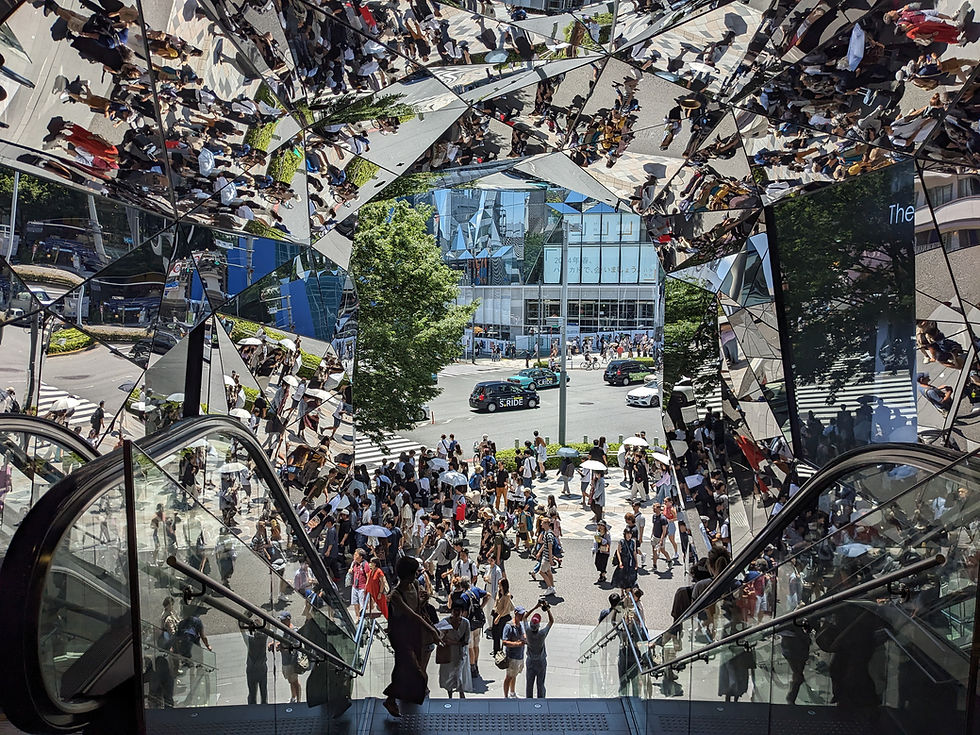
Leave from the main exit, cross the road and walk down the hill a wee bit to Takeshita Street, Harajuku's famous youth fashion alley. It's wild, it's colourful, and it's completely its own universe. Try a rainbow crepe or a matcha soft serve and soak it all in. Walk the full length of Takeshita Street to Meiji Dori Avenue, turn right, and continue to Tokyu Plaza Omotesando - the building with the mirrored kaleidoscope entrance that every Instagram user has photographed at least twice. Head to the roof for views and a rest (and public toilets).
From here, take the Fukutoshin Line from the Metro station on the corner to Shinjuku Sanchome Station (4 minutes).
Evening: Shinjuku
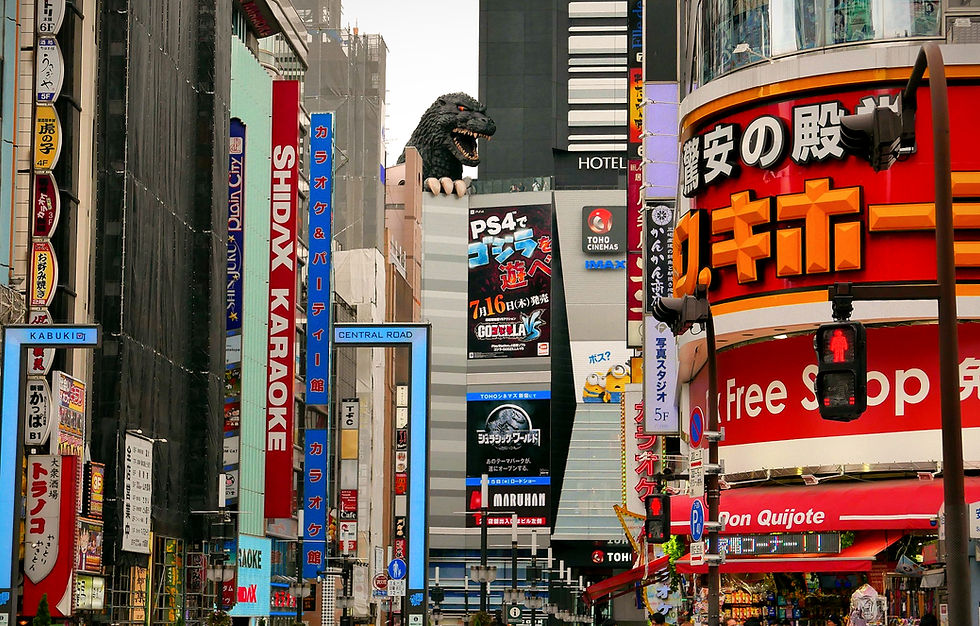
Exit at B5 and walk towards Shinjuku Station East Exit. Stop at the crossing in front to see the famous 3D cat billboard - it's one of those things that's somehow more impressive in real life than in photos. Walk north to the Kabukicho crossing, cross the street, and walk up Central Road. Keep an eye out for the Godzilla head on top of Hotel Gracery, which 'awakens' on the hour from noon to 8pm.
Then double back west to Omoide Yokocho - Memory Lane - a narrow alleyway of tiny yakitori bars that's been there since the post-war years. The bars are small (some seat fewer than ten people), smoky, and full of local regulars. It's a mecca for tourists these days but still manages to retain its charm.
Dinner tip: Omoide Yokocho is more for drinking than eating and most of the little izakaya serve bar snacks, not sit-down meals. If you're very hungry, fill up in Kabukicho before heading over. Alternatively, you could book yourself a Shinjuku food tour with a local guide and experience these little pubs, that can otherwise be a little intimidating for first-time visitors to Japan.
Day 2: Ueno, Asakusa & Skytree
Morning: Nezu Shrine & Ueno Park
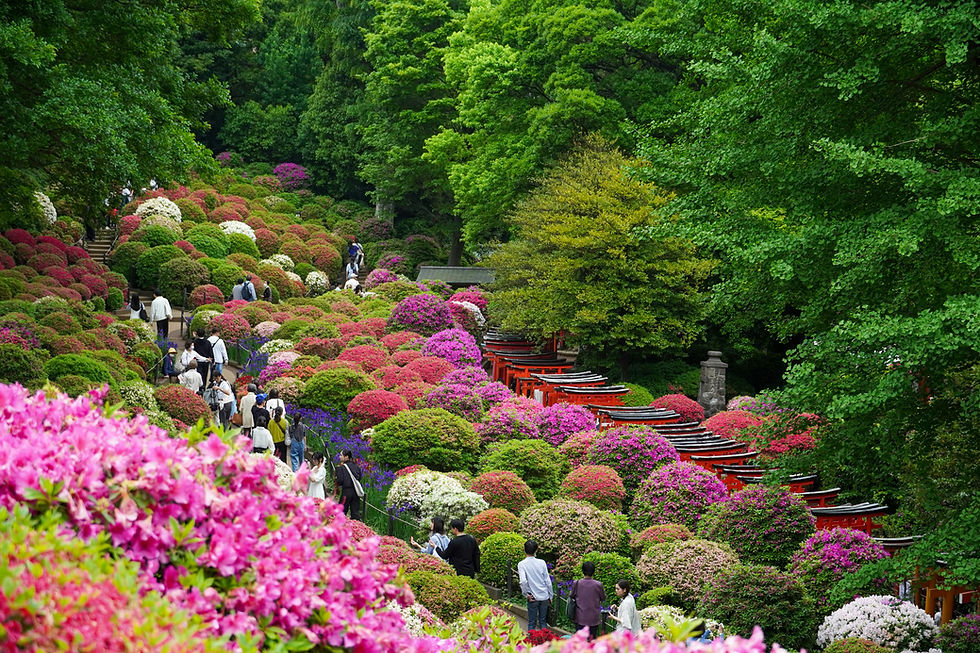
Start the day at Nezu Station on the Chiyoda Line (exit 2 is closer to the shrine; exit 1 has a lift). Walk north for 6 minutes to Nezu Shrine. If Kyoto's Fushimi Inari is on your bucket list but you're short on time, Nezu is Tokyo's answer: a tunnel of vermillion torii gates set among ancient grounds. Try to get an early start - it's significantly quieter in the morning and the light through the gates is beautiful. During azalea season (late April to mid-May), the hillside garden is spectacular.
From Nezu Shrine, walk back south and then on to Ueno Park (14 minutes). This is one of those parks that could swallow a whole day if you let it. There's Ueno Zoo; boating on Shinobazu Pond; multiple temples and shrines; world-class museums including the Tokyo National Museum; and Shiki Field if you happen to catch a baseball practice session. Spend the rest of the morning as the mood takes you.
Afternoon: Ameyoko Market & Asakusa
Leave Ueno Park to the southeast, past the statue of Saigo Takamori and the Keisei Ueno Station, and cross the street to Ameyoko Market. This open-air street market runs along the railway tracks and is one of the city's great sensory experiences: fresh seafood, dried goods, spices, street food, clothing stalls, and a noise level that somehow feels entirely appropriate. Niki no Kashi, right in the middle, is a legendary confectionery wholesaler and a brilliant place to load up on Japanese sweets and snacks for the trip home.
Don't miss Marishiten Temple, tucked up a short flight of stone steps in a small street to the right (opposite Niki no Kashi) - a surprisingly serene little temple in the middle of all the chaos. Worth a five-minute detour.

From the south end of Ameyoko, leave onto Kasugadori Avenue, turn right, and walk to Ueno-Hirokoji Station (2 minutes). Take the Ginza Line subway to Asakusa Station (8 minutes). Exits 1, 2, and 3 are closest to Kaminarimon Gate and Sensoji Temple.
Sensoji is Tokyo's most visited temple, and it earns every visit. Even in the afternoon - arguably the busiest time - there's something extraordinary about the atmosphere. Walk the length of Nakamise-dori, the shopping street lined with traditional craft shops and snack stalls leading up to the main hall.
As the heart of traditional Tokyo, the "shitamachi", and the location of the former Yoshiwara pleasure quarters, Asakusa is just dripping with culture and history. This might be a great time to take a guided walking tour through the district with a knowledgeable local guide.
Evening: Skytree & Hoppy Street
Walk back to Asakusa Station and take the Asakusa Line to Oshiage Station (3 minutes), or walk the 18 minutes if you're not in a rush. Leave from exit B3 into the Skytree Town complex.

At 634 metres, Tokyo Skytree is the tallest structure in Japan and the views from the observation decks are extraordinary. Time your visit for sunset if you can (but buy your tickets in advance) - the city glittering below as the sky shifts from orange to violet is one of the great Tokyo experiences. The Solamachi complex at the base has a food court and several restaurant floors if you want dinner here.
Alternatively, take the Asakusa Line back to Asakusa and walk west to Hoppy Street, a short stretch of izakayas that comes into its own after dark. Walk through the grounds of Sensoji on the way - at night it's illuminated and almost entirely crowd-free, which makes for very different, very good photos.
Day 3: Tokyo Tower, Hamarikyu & Odaiba
Morning: Tokyo Tower & Hamarikyu Gardens
Take the subway to Kamiyacho Station and leave from exit 1. Walk south then turn left into Tokyo Tower Dori Street. Even if you don't go up (and it's worth doing - book in advance if you want to avoid queues at the ticket counter), Tokyo Tower is one of those icons that deserves a moment. From below, the red-and-white lattice structure is even more striking than you'd expect.

A 3-minute walk east brings you to Zojoji Temple - a beautiful and often-overlooked Buddhist temple whose main hall frames Tokyo Tower perfectly in photos. The juxtaposition of 17th-century temple and mid-century modernist tower, both towering over the same forecourt, is uniquely Tokyo.
From Zojoji, walk east to Daimon Station and take the Oedo Line to Shiodome Station. Leave from exit 10 and walk east to the Nakanogomon Bridge entrance to Hamarikyu Gardens (20 minutes altogether - or 25 minutes on foot directly from Zojoji). Hamarikyu is a traditional Japanese landscape garden dating back to the Edo period, now surrounded by skyscrapers on all sides. The contrast is stunning. Have a matcha and a Japanese sweet in the teahouse on the central island before heading onwards.
Afternoon: Odaiba & teamLab Planets

Leave Hamarikyu via the Nakanogomon Bridge, walk to Shiodome Station, and take the Yurikamome Line to Daiba (a day pass is recommended if you're following the itinerary, since you'll be making more than two journeys on the Yurikamome). Head to DiverCity for lunch (we love Kushi Monogatari but there are so many restaurants to choose from and there's a casual food court too) and some shopping, and walk down to the waterfront for the view of Rainbow Bridge and the city — and Tokyo's fun-size Statue of Liberty, which is just as surprising as it sounds.
Then take the Yurikamome Line to Shin-Toyosu Station (15 minutes) for teamLab Planets. We've been to most of the major teamLab venues around Japan and this is our favourite. You walk barefoot through a sequence of immersive rooms filled with light, water, and moving imagery - it sounds gimmicky, and then you're standing ankle-deep in water surrounded by projections of koi carp and you stop thinking about whether it's gimmicky. Book well in advance and aim to arrive at least 20 minutes before your admission slot — queues are long even with pre-booked tickets.
Evening: Odaiba by Night & Ginza
After teamLab, take the Yurikamome back to Daiba and head to DiverCity for the evening. The Rainbow Stairs are excellent for photos at night, and if you time it right you can watch the life-size Gundam statue outside the building transform. The Tokyo Bay views after dark are spectacular.

To end the day in style, take the Yurikamome Line to Shimbashi Station, leave from exit 2B, and walk north to Ginza. Tokyo's most upscale shopping district is best experienced in the evening when the window displays are lit and the streets have a different energy. You don't have to buy anything - even dedicated non-shoppers enjoy the atmosphere, and the Uniqlo flagship store in Ginza is worth a look on its own terms.
Dinner options from Odaiba to Ginza cover every budget and every cuisine — izakayas, high-end kaiseki, casual ramen, and everything in between.
Half-day options for arrival & departure days
Got a half day on arrival or departure? Here are our top picks:
Arrival day
• Tokyo Metropolitan Government Building: Free 45th-floor observation decks with 360-degree views, sometimes including Mt. Fuji. Great for getting your bearings. Allow 1-2 hours.
• Tokyo Character Street / Ramen Street: Both are inside Tokyo Station's underground concourse - perfect for a first bowl of ramen to get your trip of to a banging start. You're very central here too and can even walk over to have a look at the Imperial Palace.
• Onsen: Thermae Yu in Shinjuku is open 24/7 and tattoo-friendly - a really relaxing way to start a Japan trip.
Departure day
• Tsukiji Outer Market: Opens at dawn - ideal before an afternoon flight. Fresh seafood breakfast, unique stalls, vibrant atmosphere.
• Yanaka Ginza: Old Tokyo charm, traditional snacks, local crafts, slow pace. Easily reachable from Nippori Station (which has coin lockers and is close to Ueno with direct airport access via the Keisei Skyliner).
• Narita-san temple: This one is highly recommended if you're leaving from Narita airport. Drop your bags off in the airport and head back into Narita town for a last taste of traditional Japan. Gives Kyoto vibes all the way.
Rainy day alternatives
It's always good to have a back-up plan up your sleeve incase the weather turns (especially if you're travelling to Japan during rainy season). Thankfully, the indoor options are endless in Tokyo and it's even to keep even the kids entertained on a wet day.
• Odaiba: Joypolis indoor amusement park, City Circuit go-karting, bowling, Small World, and the (in)famous Poo Museum (which our kids ADORED).
• Karaoke: You haven't experienced Japan until you've belted out your favourites in a private room at Big Echo or Karaoke Kan. Rooms by the hour, all-you-can-drink packages available. Karaoke has often been our go-to when we need a break from the heat or the rain.
• Depachika: The underground food halls of Tokyo's department stores (Isetan in Shinjuku, Nihombashi Takashimaya, Ginza Mitsukoshi) are a world of their own - and you can assemble a spectacular hotel-room picnic for not a lot of money.
• Museums: The Tokyo National Museum, Mori Art Museum, and Yayoi Kusama Museum (tickets must be booked in advance) are all world class.
• Sumida Aquarium: A beautifully designed urban aquarium in the Solamachi complex at the base of Skytree. There's also a small aquarium in Ikebukuro's Sunshine City.
• Book a show, indoor tour or cultural experience: there are too many to list here but there is a vast range of activities you can do indoors, for example the Making of Harry Potter Studio Tour, a sumo show (these book our quickly but you may be able to snag a ticket short notice for an early morning slot), the new Samurai Restaurant show (the successor to the super-popular but sadly defunct Robot Restaurant), a visit to a maid cafe, a make-your-own chopsticks experience... the list goes on. Have a look on GetYourGuide for other ideas.
Tokyo 3-day itinerary: FAQ
How do I get around Tokyo on this itinerary?
The Tokyo Metro and Toei subway systems cover almost everything on this itinerary, so you could consider buying yourself a 3-day metro pass to save some money. Otherwise, we highly recommend getting yourself a Suica or Pasmo IC card at any major station (or even as an app on your iPhone) - it works on all trains, most buses, and even in convenience stores. It won't save you any money but, like with the metro pass, you can just tap and go at every train station without buying a new ticket everytime.
Is three days enough for Tokyo?
Honestly, no - but this itinerary gives you a genuinely solid introduction. You'll cover Shibuya, Harajuku, Shinjuku, Ueno, Asakusa, Odaiba, and Ginza, with time for both the iconic landmarks and a few of the quieter, more local spots in between.
When is the best time to visit Tokyo?
Spring (late March to mid-April for cherry blossom) and autumn (November to early December for autumn leaves) are the most beautiful seasons, but they are also peak tourist time and you'll find everything quite full. Summer is extremely hot and humid but has great festivals and a really nice vibe. Winter is cold and clear, and often the best time to spot Mt. Fuji. December, January, February are under-rated but one of our favourite times of the year to visit Tokyo.
Do I need to book anything in advance?
Yes, absolutely! Shibuya Sky, Tokyo Skytree, and teamLab Planets all sell out well ahead, particularly for popular time slots. Book as early as possible, ideally before you leave home. See the 'Book These Before You Leave Home' section above.
Where should I stay in Tokyo for this itinerary?
We highly recommend staying in Ginza, one of the best connected districts in Tokyo and right one the lines you'll need for the early morning starts on this itinerary. Last time we put this itinerary into action, we were staying near Tawaramachi Station in Asakusa and it worked out well. Ueno would also be a good choice. Definitely stay somewhere in central Tokyo: the outskirts of the city might be a little cheaper but with only 3 days to pack as much into as possible, you don't want those lengthy commutes.
Can I stretch this itinerary out to four days in Tokyo?
Sure. This 3-day Tokyo itinerary is just the bones of a short Tokyo trip. You might want to spend a day in Tokyo Disney, for example, or make one or two of the fantastic day trips from Tokyo that are possible. Look at the itinerary as modular: swap out a morning, an afternoon or an evening to do the activities and visit the places that you want to do but that aren't included in the itinerary. You can easily stretch it out into a 4-day or 5-day Tokyo itinerary... or even for a week.

Collecting your Japan trip inspiration on Pinterest? Hover over and click this pin to save it to your board
Want us to plan a Tokyo trip just for you? Need help putting together your first trip to Japan? Just get in touch.


Comments