Tokyo SkyTree: see Tokyo sparkle from its highest viewpoint!

Updated: Jan 14
Get ready to have your breath taken away and maybe your ears popped at Tokyo SkyTree observation deck (東京スカイツリー)! Not to be confused with Tokyo Tower, SkyTree is a colossal broadcast and observation tower that pierces the Tokyo skyline, standing as one of the tallest structures in the entire world and offering unparalleled, breathtaking 360-degree panoramic views of the sprawling metropolis, stretching all the way to Mount Fuji on a clear day.
Disclosure: This post contains affiliate links. If you click through and make a purchase, I may earn a small commission, ♡ at no extra cost to you ♡
Jump to:
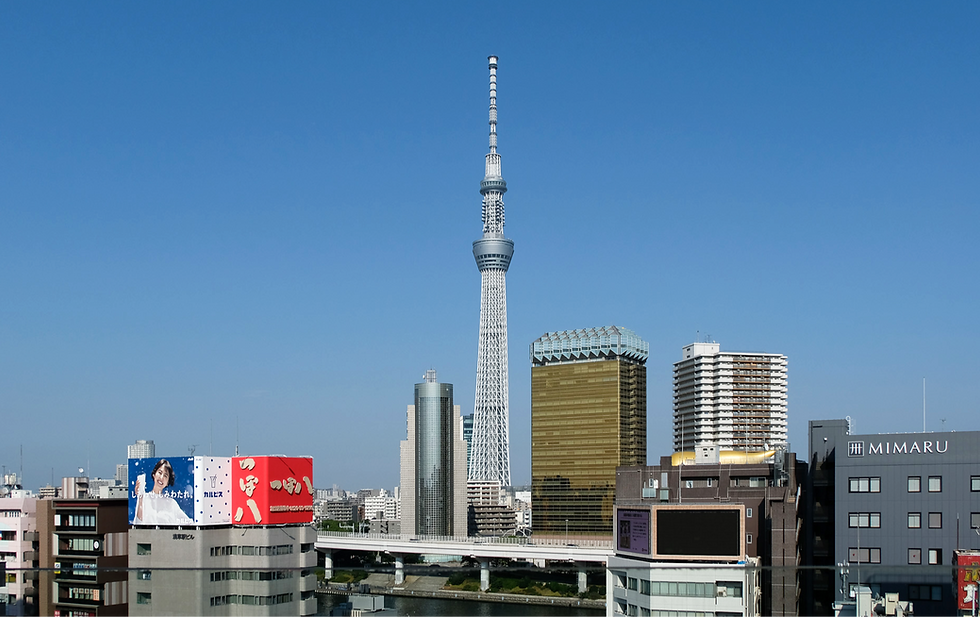
Did you know that the SkyTree is modeled after the design of ancient five-story pagodas, renowned for their stability. Standing at an impressive 634 metres, the height was chosen for a reason: the numbers "6," "3," and "4" can be read in Japanese as "mu-sa-shi," a nod to the old Musashi Province, which once encompassed the area where the tower now stands. It's a modern marvel, an iconic symbol of Tokyo's future, and an absolute must-do for anyone wanting to see the city from an entirely new angle.

Getting there – where is Tokyo SkyTree?
Tokyo SkyTree is super easy to reach, with direct connections to major subway and train lines.
Nearest station: You can reach SkyTree directly from Tokyo SkyTree Station (とうきょうスカイツリー駅) on the Tobu Skytree Line, or Oshiage Station (押上駅), which is served by the Tobu Skytree Line, Tokyo Metro Hanzomon Line, Toei Asakusa Line, and Keisei Oshiage Line. Both stations have direct connections to the Tokyo Solamachi complex at the base of the tower.
By taxi: Taxis can drop you off directly at the Tokyo Solamachi complex.
Accessibility: Tokyo SkyTree is a very modern facility, fully designed for accessibility. It's equipped with fast, spacious elevators to whisk you up to the observation decks, making it perfectly wheelchair and stroller friendly.
Opening hours & best time to visit
To truly maximise those incredible views, a little strategic timing can go a long way!

Opening hours: Tokyo Skytree is typically open daily from 9:00 AM to 9:00 PM (with last admission usually at 8:00 PM). Hours can vary for special events, public holidays, or during specific maintenance periods, so always check their official website before your visit.
Best time to visit:
Sunset: This is, hands down, the most popular and magical time! You get to witness the city bathed in golden hour light, then watch as countless lights begin to twinkle, transforming Tokyo into a dazzling carpet of stars. It's utterly breathtaking.
Morning (right at opening): If you're looking for fewer crowds and potentially clearer air (which can sometimes lead to better visibility for Mount Fuji!), visiting right at opening time (9:00 AM) on a weekday is a fantastic choice.
Clear day: Crucially, always check the weather forecast! A clear day is essential for those expansive, long-distance views and for a chance to see the iconic Mount Fuji. Overcast or rainy days will significantly limit visibility, though the city lights at night can still be impressive even with some cloud cover.
Time to avoid: Weekends, Japanese national holidays, and especially the hour leading up to and during sunset, are the busiest times. If you dislike crowds and want a more relaxed experience, aim for a weekday morning or early afternoon.
SkyTree tickets
If you're absolutely set on those sunset views, you should plan ahead.
Reservations: Reservations are highly recommended, especially for popular times like sunset, weekends, or during peak travel seasons. You can usually purchase tickets up to 30 days in advance. While same-day tickets might be available at the counter, be prepared for sometimes extremely long queues or even sell-outs during busy periods.
Where to make reservations & how far in advance: Tickets can be purchased online directly via the official Tokyo Skytree website. For those coveted sunset time slots, it's advisable to book as soon as tickets become available (often 30 days out) as they are the first to sell out. For general daytime slots, book a few days to a week in advance.
If you plan on visiting several attractions like Tokyo SkyTree while in Tokyo, you could consider buying the Klook Tokyo Pass. Buy a pass for 2-7 attractions and save up to 48%. Click the link below for details on the Klook website.
Ticket/admission price: Tokyo Skytree has two observation decks, and pricing varies (prices as of August 2025; subject to change):
Tembo Deck (350m): Entry to this first observation deck costs approximately ¥2,100 (weekdays) / ¥2,300 (weekends/holidays) for adults when purchased online in advance.
Tembo Galleria (450m): To access this higher deck, you'll need an additional ticket, usually purchased after you've reached the Tembo Deck. This typically costs an extra ¥900-¥1,000.
Same-day tickets are around ¥400 more expensive.
Payment method: Online reservations usually require credit card payment. On-site tickets (if available) can typically be paid for with cash, major credit cards, and common IC cards (Suica/Pasmo).
What can you see & do at SkyTree?
Tokyo Skytree offers more than just a view. If time allows, plan in an extra hour or two to explore Solamachi and other attractions
Tembo Deck (350 meters): This is the first observation deck, offering expansive, panoramic views through huge, clear windows. You'll find souvenir shops here, as well as a café where you can enjoy a drink with a view.
Tembo Galleria (450 meters): For an even more thrilling experience, take the next elevator up to the Tembo Galleria. This unique, glass-covered spiral walkway gradually ascends around the tower's circumference, making you feel like you're floating in the sky. The views from this height are simply breathtaking and feel even more dramatic.
Glass floor: On the Tembo Deck, don't miss the small section of glass floor. Go on, we dare you!.
Souvenir shops: Each observation deck has its own exclusive souvenir shop where you can pick up SkyTree-themed merchandise, from cute character goods to more elegant souvenirs.
Sky Restaurant 634 (Musashi): For a truly special experience, consider dining at the Sky Restaurant 634, located on the Tembo Deck. It offers fine dining with unparalleled views, but it requires a separate reservation and comes with a premium price tag.
Tokyo Solamachi: At the base of the SkyTree is Tokyo Solamachi, a massive shopping and dining complex. It's packed with hundreds of shops, restaurants, cafes, and even an aquarium (Sumida Aquarium) – perfect for pre or post-tower exploration! Ghibli fans shouldn't miss Donburi Republic, filled to bursting with Studio Ghibli character goods.
Special events: Look out for special events featuring anime, celebrity appearances and even yoga sessions in SkyTree. Check the official website for the latest programme.
Facilities:
Tokyo SkyTree and its surrounding complex offer excellent facilities for visitors.
Eating & drinking: You'll find cafes and snack bars on both observation decks. At the base, Tokyo Solamachi boasts a massive array of restaurants, ranging from casual eateries to fine dining, covering every cuisine imaginable. Tip: The Kura Sushi Flagship Store, currently the world's largest revolving sushi restaurant, is just on the other side of Oshiage Station. You can typically bring bottled water onto the observation decks, but other food/drinks are restricted.
Toilets: Modern, clean restrooms are plentiful on all levels of Tokyo SkyTree and throughout the Tokyo Solamachi complex.
Baby-changing facilities: Baby-changing facilities and nursing rooms are available on the observation decks and throughout the Tokyo Solamachi complex.
Japansophy’s Top Tips!
Book online & go for sunset! If your schedule allows, a pre-booked sunset ticket is the ultimate experience. The transition from day to night over Tokyo is unforgettable and the sunset hour tickets for SkyTree are much easier to get hold of than for Shibuya Sky.
Check visibility first: Before committing, especially if you're hoping to see Mount Fuji, check the live webcams or a visibility forecast. A clear day truly makes a difference but there will have to be low humidity, too, if you're going to glimpse the iconic mountain.
Consider both decks: If your budget allows, ascending to the Tembo Galleria (450m) offers an even more unique and slightly more exclusive viewing experience.
Explore Tokyo Solamachi: Don't just go up and down the tower! The shopping and dining complex at the base offers hours of entertainment, unique Japanese shops, and a fantastic range of restaurants.
Special birthday treat for kids: If your child's birthday falls within the month of your visit, tell the ticket office and your child will be given a free birthday sticker and crown (offer valid as at June 2025).
Be aware of fake "official" websites: There are several fake SkyTree websites offering tickets at grossly inflated prices (and for dates that are not available on the official website). Reserve your tickets only at the official website or through a reputable distributor such as Klook.
Other attractions nearby:
Tokyo SkyTree's location puts you right in a fascinating area, blending modern marvels with traditional charm.
Senso-ji Temple & Nakamise-dori: Just across the Sumida River (a pleasant walk or short train ride away), you can step back in time at Tokyo's oldest temple and its bustling traditional shopping street.
Sumida River Cruise: Take a scenic boat trip from the pier near Asakusa (across the river) offering unique views of the SkyTree from the water as you glide towards Tokyo Bay.
Asakusa Culture Tourist Information Center: Located opposite the Kaminarimon Gate in Asakusa, this building offers tourist info and a fantastic free observation deck with great views of Senso-ji and the SkyTree.
Kappabashi Street (Kitchenware Town): A short walk from Asakusa, this unique street is entirely dedicated to kitchenware and restaurant supplies – a fascinating place for foodies!
Hotels near Tokyo SkyTree
Staying near SkyTree may not be the obvious choice, but it has several advantages: it is very well connected by subway to Tokyo's other centres (you can even walk to Asakusa in around 20 minutes) and has plenty of shops and restaurants but has a quieter, more chilled vibe.
The Richmond Hotel Premier Tokyo Schole is a very popular mid-range base right at Oshiage Station, but, if it's views you're after, many hotels in Asakusa have rooms with SkyTree views, some even with balconies or roof terraces.
Tokyo SkyTree FAQ
Is it worth going up the Tokyo SkyTree?
The Tokyo SkyTree observation decks are the highest in Tokyo, so you'll definitely have the best view over the city. If the weather is fine, you may also see Mount Fuji in the distance. It's the perfect place to grasp the breathtaking scale of this city.
Is it better to go to the SkyTree in the day or at night?
The views are always breathtaking, no matter what time of the day. It depends if your preference is for a billion lights twinkling over the city or Tokyo laid out at your feet as far as the eye can see. For the best of both worlds, aim for the sunset hour and catch the cityscape by day and by night!
Can I see Mt. Fuji from Tokyo SkyTree?
As is always the case with Mount Fuji, seeing it - no matter where you are - is a matter of meteorological luck. Your best chance of seeing Mount Fuji from Skytree is in the winter months when the skies are clear and humidity is low. At other times of the year, you might have luck in the mornings before humidity rises.
Tokyo SkyTree vs Tokyo Tower: which is better?
Tickets for Tokyo Tower are certainly cheaper, if budget is a factor of consideration. But SkyTree is almost twice as tall. On the other hand, we think that you can get better photos from Tokyo Tower, in the first place because it's not so tall and secondly because the windows of Tokyo SkyTree don't really allow the best shots. Tokyo Tower still has some cool, retro cachet that draws a lot of fans, whereas SkyTree is sleek, modern and - we would say- less charming.
Ready to experience Tokyo from the highest heights and explore its vibrant districts? Our 3-Day Tokyo Itinerary includes a breathtaking visit to Tokyo Skytree, perfectly combined with the best of Asakusa!


Comments