Hamarikyu Gardens: Tokyo's Tidal Pond Oasis with a Skyline View!

Updated: Oct 4
Disclosure: This post contains affiliate links. If you click through and make a purchase, I may earn a small commission, ♡ at no extra cost to you ♡ It helps cover the costs of keeping this site alive and we really appreciate your support
*Any prices quoted below are subject to change

The first time we went to Hamarikyu Gardens (浜離宮恩賜庭園), it was on a longer stay in Tokyo. To be honest, Tokyo has so much going on that, even having been there umpteen times, gardens were always low on our list of priorities, especially when travelling with young teenagers ("But we've got a garden at hoooome"). But then we found ourselves on an unrushed, childless trip to Tokyo, happened to be in the area and decided the 300 yen ticket was definitely worth a look at least. We took a Japanese friend with us, who has lived in Tokyo all his life and was a bit skeptical because he'd only been to Hamarikyu Gardens once and that had been on a school trip four decades before. Somewhere in his subconscious, he had obviously deemed Hamarikyu only worth the one visit.
But we were all wrong to have ignored Hamarikyu Gardens for so long. In a city that can boast some gorgeous parks, Hamarikyu really is special. This magnificent traditional Edo-era Japanese garden features a truly unique tidal pond, fed by the waters of Tokyo Bay, with meticulously manicured landscapes, quaint teahouses, and the glittering skyscrapers of Shiodome providing a dazzling, modern backdrop. It's easy to lose yourself completely in other Japanese gardens but this one is so "Tokyo", it's impossible to forget where you are.
The history of these gardens is as rich as their landscape - which is probably why it's on the school field-trip list. Originally built as a villa and falconry hunting ground for feudal lords during the Edo period, it was later used as a detached palace for the Imperial family. Its most remarkable feature is the central tidal pond, Shioiri-no-ike, which is the last of its kind in Tokyo. Sluice gates open and close with the tides, causing the pond's level and appearance to change throughout the day and allowing seawater fish like black mullet and eels to enter. This dynamic ecosystem makes for a constantly evolving landscape and also means the garden looks different at different times of the day. Our tip: time your visit with high tide if possible, because that's when the pond looks its best. Check the Tokyo tides here.
The Hamarikyu Gardens teahouse
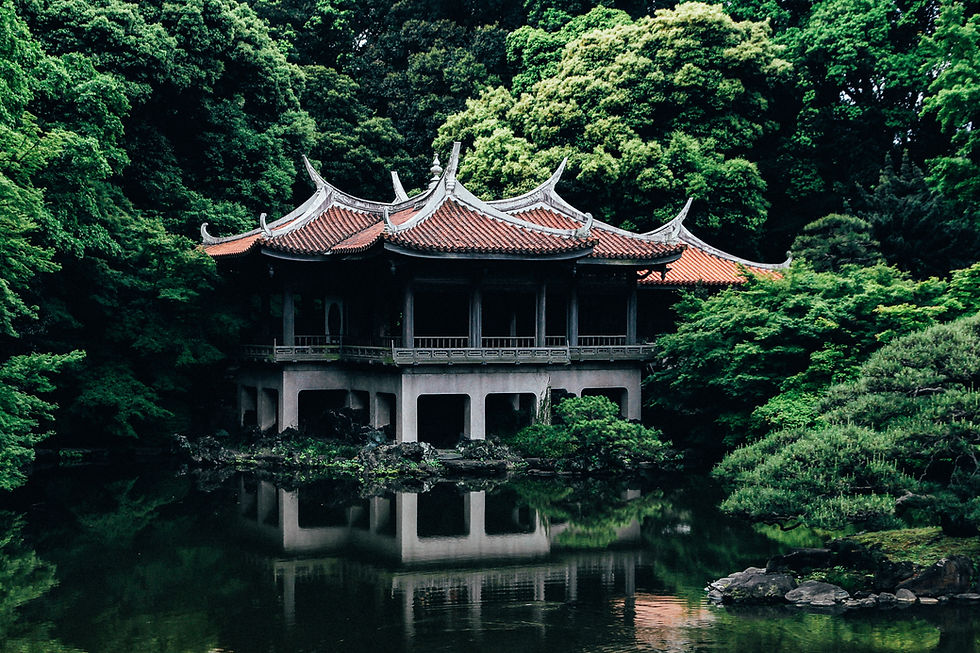
The Nakajima-no-ochaya sits on the largest island in the tidal pond, connected to the main garden by the long wooden Otsutai-bashi bridge. It's a traditional structure that genuinely looks like it's floating on the water, especially when the tide is high.
Order the matcha and wagashi set. Sit on the tatami-style seating at the edge overlooking the pond. This is not a tourist trap — it's a legitimate, unhurried tea experience in one of the most beautiful settings in Tokyo. The wagashi (traditional sweet) is served alongside and is meant to balance the bitterness of the matcha; eat it first.
If you happen to be in Tokyo at the end of October, you could participate in the Grand Tokyo Tea Ceremony held every year in Hamarikyu Gardens. The event is very beginner- and foreigner-friendly, with indoor and outdoor ceremonies and even fun activities for the kids. Details are available on the official website.
And you don't want to miss...
The 300-year-old pine tree (Sanbyakunen no Matsu): this black pine tree was planted by the 6th Tokugawa Shogun, Ienobu, more than 300 years ago. It's an impressive example of meticulous Japanese garden artistry, with its branches carefully propped and shaped. It doesn't sound like much of a draw but while we were there, it had a small circle of fans fawning over it. And let's face it, any living thing that can boast 300 years of existence, especially in a city like Tokyo that was fire-bombed into oblivion in WWII, deserves a bit of attention.
The one thing nobody tells you
Hamarikyu Gardens are huge. Most visitors beeline for the pond and teahouse and leave. But the old duck hunting grounds in the northern part of the garden are worth exploring. During the Edo period, elaborate systems of channels, nets, and decoys were used to lure wild ducks into traps for the shogun's hunting parties. The structures that remain are strange and fascinating — nothing like anything else in a Japanese garden. A lot of visitors walk straight past them.
Getting there – where are Hamarikyu Gardens?
No wonder Hamarikyu Gardens was a playground for successive daimyo and the imperial family because the location is stunning and you can even arrive by boat! The Tokyo Water Bus (Sumida River Line) will take you directly from Asakusa to the garden's own pier. It's a fantastic way to see the city from a different perspective and arrive in style. It's a little more expensive and takes longer than the train but it's an experience in itself.
Nearest stations:
Shiodome (Toei Oedo / Yurikamome lines) — 7-minute walk
Tsukijishijo (Toei Oedo Line) — 7-minute walk
Shimbashi (JR Yamanote / Tokyo Metro Ginza / Toei Asakusa lines) — 10–15-minute walk
Hamarikyu Gardens practical info:
Opening hours: Daily 9:00 AM – 5:00 PM (last entry 4:30 PM). Closed Mondays (or the following Tuesday if Monday is a public holiday) and over New Year. Check the official website before visiting for seasonal closures.
Admission: ¥300 for adults. Reduced rates for seniors (65+) and students. Children under 12 are free. Pay by cash or IC card (Suica/Pasmo) at the entrance.
No reservations needed — just turn up.
Accessibility: Hamarikyu Gardens feature generally flat, wide pathways, making it quite accessible for wheelchairs and strollers. While some smaller areas might have gravel paths, the main routes are very navigable.
Best time to visit Hamarikyu Gardens
Well, we mentioned above that you should time your visit, if you can, with high tide - the pond can look a wee bit muddy and sad at low tide. We would also advise going in the morning: we were there at opening last time and there weren't more than 20-30 people sharing the whole garden with us.
Hamarikyu is gorgeous at any time of year, honestly, but there are some seasonal highlights. It's one of Tokyo's favourite cherry-blossom (end of March / beginning of April) and autumn-foliage (late November / early December) viewing spots and can get very crowded (this is definitely when you want to be there at opening time). But few tourists know that it's also a great place to appreciate the plum blossoms of early spring (late February / early March) and that there's a beautiful field of cosmos in October.
Other attractions near Hamarikyu Gardens
You might think that Hamarikyu Gardens are a bit out of the way but there's lots going on down in this part of Tokyo and you can easily make it into a half-day trip. First of all, you've got Tsukiji Outer Market: You could start your day off early here with breakfast before heading over to Hamarikyu and entering the Gardens via the Otemon Bridge (lovely views); it's about 10 mins' walk.
To the north of the gardens, between Tsukiji and the Otemon entrance is the Caretta Shiodome building. It's essentially a shopping and restaurant complex but we mention it because it has a free observation deck on the 46th floor with panoramic views over the entire bay area, including Hamarikyu Gardens.
While you're down here, we can also recommend walking over to Zojoji Temple.
It's around 20 mins on foot, and you might be a bit tired by now, but Zojiji hasn't really been discovered yet by the tourist hoards and it's one of our favourite temples in Tokyo, so we think it's well worth it.
If you're heading off to Odaiba for the day, you could easily invest an hour in Hamarikyu before you go. The gardens are about 10 mins' walk from the Yurikamome line (either Shiodome Station or Shimbashi Station).
If you need ideas on how to fit Hamarikyu Gardens into your Tokyo plans, our 3-Day Tokyo Itinerary will map out your day for you, making sure you don't waste too much time on trains and criss-crossing the city needlessly.
So, are Hamarikyu Gardens worth it?
We say yes, and we'll definitely try to fit them in again sometime soon. It's not the typical Japanese garden you'll find in Kyoto but the setting and the history make them unique. And the best part is that they're overlooked by many tourists (and locals) in favour of Shinjuku Gyoen and Meiji Gyoen, to name but two, so except for sakura and momiji seasons, Hamarikyu never feels crowded. We love the gardens as a really chill place to escape the madness of Shibuya or Shinjuku for a while. But, having said that, the gardens are vast and you need to have the time to invest and explore the history of the place, take in the atmosphere, sip a matcha. They're not so compatible with a hectic, fit-everything-in schedule, in which case you should mark them in for your second trip to Tokyo.


Comments