teamLab Planets: is it still worth it in 2026?

Updated: Sep 27
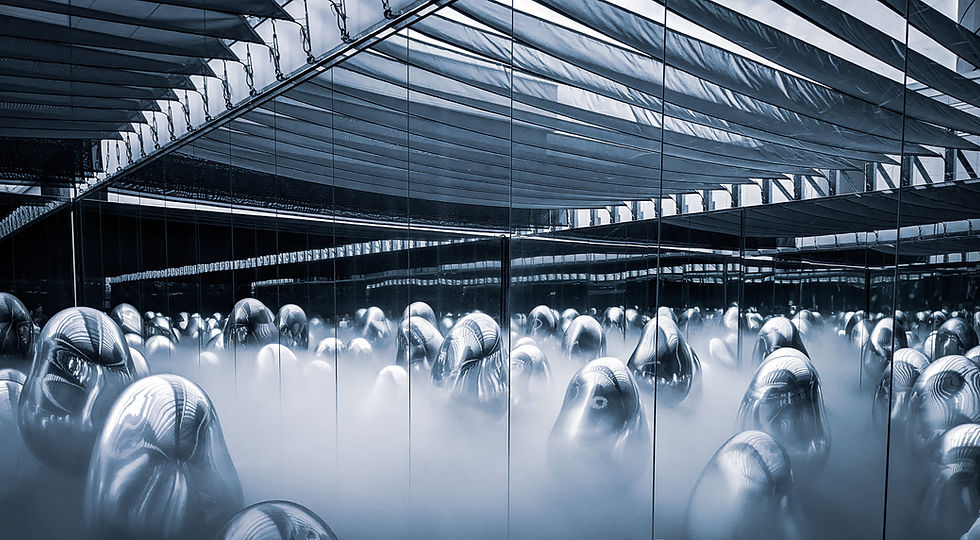
You will wade through water. You will lie on the floor. You will almost certainly lose track of time. And you will absolutely take too many photos. teamLab Planets TOKYO (チームラボプラネッツ) is one of those rare experiences that is genuinely difficult to describe to someone who hasn't been — not because it's complicated, but because it's hard to find the words. Even videos don't tell the full story of what it's like to be surrounded by the digital art in this fully immersive digital art museum in Tokyo's Toyosu district.
For the Japansophy kids, a visit to this exhibition is the highlight of every Tokyo trip. Here's everything we've learned on our several visits, so you know what to look out for. If you've stumbled across this page while trying to decide between teamLab Planets and teamLab Borderless, we have a comparison of the two here to make your decision easier!
Disclosure: This post contains affiliate links. If you click through and make a purchase, I may earn a small commission, ♡ at no extra cost to you ♡ It helps cover the costs of keeping this site alive and we really appreciate your support
*Any prices quoted below are as of June 2026 and are subject to change
What is teamLab Planets?
Located in Tokyo's Toyosu district (close to where the famous fish market is now), teamLab Planets is a permanent exhibition created by the international art collective teamLab, describing itself as a digital art museum. The installations are designed to dissolve the boundaries between the viewer and the artwork, creating a seamless and holistic experience. Unlike teamLab Borderless (their other Tokyo museum), Planets has a guided route through a smaller number of deeply intense spaces. You're not wandering a vast museum; you're descending into each world one at a time, often with dark corridors in between.
Getting there – where is teamLab planets?
While outside the city centre, teamLab Planets is easily accessible by Tokyo's efficient public transport.
Nearest station: The closest station is Shin-Toyosu Station (新豊洲駅) on the Yurikamome Line, which is just a super quick one-minute walk away from the exhibition. You can also walk in about ten minutes from Toyosu Station (豊洲駅) on the Tokyo Metro Yurakucho Line and Yurikamome Line. This is a faster, cheaper way to get to teamLab Planets, especially if you're travelling from Ikebukuro or Ginza... but the Yurikamome ride is pretty special.
By taxi: A taxi can drop you off directly at the venue's entrance. Be aware that the museum is well outside central Tokyo and fares (e.g., Shinjuku or Tokyo Station) would typically range from ¥5000 - ¥6500 depending on traffic.
By shuttle bus: There's a handy, low-cost shuttle bus from Ginza Six directly to teamLab Planets and back. Tickets are available on Klook and can be bought as one-way trips, so you can be more flexible with your itinerary before or after Planets.
Accessibility: teamLab Planets is designed to be immersive, which involves walking through water and sometimes on soft, uneven surfaces, so it's not entirely wheelchair or stroller friendly. We have seen guests in wheelchairs every time we've visited and they basically bypass some rooms and narrower corridors. Strollers are not permitted inside the exhibition and your own wheelchair might not be suitable. Check the website for the latest information on accessibility.
Opening hours & best time to visit teamLab Planets

Hours vary by day, season, and public holidays - typically somewhere between 9:00 AM–9:00 PM or 10:00 AM–8:00 PM, with last entry one hour before closing. They also close some Thursdays for maintenance. Always check the official website for the exact opening hours on your specific travel date before you plan your visit.
Best time to visit:
Weekday mornings right after opening or the last hour or two before closing are the quietest times. You're not likely to have the place to yourself but it will certainly be more peaceful.
Time to avoid: Weekends, Japanese national holidays, and mid-afternoon slots are typically the busiest. During these times, some rooms can feel very full, which might detract from the magical, immersive feeling. If you're sensitive to crowds, try to avoid these periods. We have to say, though, we usually visit in the afternoon because we combine it with lunch in Odaiba and we've never felt that it was overcrowded. Tickets are timed and most people don't stay more than 1.5-2 hours, so there's a good flow of visitors and few real tourist-jams.
TeamLab Planets tickets
This is non-negotiable: book in advance.
TeamLab Planets operates on timed entry slots (e.g., 10:00 am - 10:30 am). You generally can't just show up (there may be a few cancellations but the chances are slim). Tickets go on sale around 10 weeks in advance and popular slots sell out rapidly. A quick check today of the official website shows that all slots are sold out for the next 4 weeks, so you need to be booking at least 5 weeks in advance and then you can't be fussy about the time slot. You can buy your tickets online from the website or on Klook and GetYourGuide (which also offers various tours that include TeamLab Planets) , who often have special deals or combo-packets with other attractions or transport tickets. Click on the link below to check prices and availability on Klook:
Tickets generally cost ¥3,800 to ¥4,600 for adults, depending on the date and time slot. There are discounted rates for junior high/high school students, children, and those with disabilities.
What can you see & do at teamLab Planets?

TeamLab Planets expanded last year to include 20 new installations and features. Some of these are a bit more reminiscent of TeamLab Borderless and are similar to what you'll see in TeamLab Biovortex in Kyoto. There are two distinct areas: "Water" and "Forest". For "Water" you'll remove your shoes at the entrance (free lockers provided) and walk barefoot through a sequence of immersive spaces. A lot of them involve water - no surprise there. It's shallow enough to wade through but deep enough that you'll want to roll your trousers or wear shorts. You can keep your shoes on for the "Forest" part. Just be aware that no heels and no sandals are allowed - you can borrow appropriate footwear if necessary.
Some of the most popular areas are:
"Drawings on the Water Surface Created by the Dance of Koi and People – Infinity": This is often the highlight! You walk barefoot through shallow water, with digital koi fish swimming around your feet. As you interact with them, they change colour or burst into flowers. It's absolutely magical and incredibly calming. Don't miss the "secret room" on the right, where you can interact with streams of water.
"Floating in the Falling Universe of Flowers": This is a pretty trippy experience You'll lie or sit in an immersive room filled with constantly falling and changing digital flowers, creating a truly ethereal and dreamlike experience. It's like floating in a cosmic garden. The projections make it feel like the floor is tilting, so be careful when you stand up again, because we were all left feeling a little disoriented.
"The Infinite Crystal Universe": Step into a room filled with countless suspended LED lights that create an illusion of endless, sparkling space. Visitors can interact with this artwork using their smartphones, adding to the ever-changing light patterns. It’s breathtakingly beautiful and offers incredible photo opportunities.
The exhibits have been in a state of flux since the addition of the new section last year and some of these are outside, meaning that they can be closed if the weather is very bad. "Soft Black Hole", which was one of our favourites, is currently closed for renovations. Check the official website for the latest updates if there is a particular room or feature that you definitely don't want to miss..
Our top tips for visiting teamLab Planets
Book tickets well in advance: Planets is still the most popular of the TeamLab exhibitions in Tokyo and tickets sell out early. Especially if you have a particular time or date in mind, you'll want to book as early as possible but definitely 4-5 weeks in advance. You can book through the official website or through Klook or GetYourGuide - handy if you're booking all your Japan tickets through them anyway.
Wear appropriate clothing: For the water exhibits, wear shoes that are easy to take off and clothes you can easily roll up above your knees (or wear shorts/a skirt). You'll not be allowed to go into the "water" area wearing tights or stockings - these will have to come off too! You'll be provided with small towels to dry your feet. Be aware that many of the floors are mirrored, so short skirts can be unintentionally revealing. You can borrow shorts if necessary.
Kids in the water: The water is never about mid-calf height on the average adult but that could well be above-the-shorts level for a small kid. And, we know from experience, they tend to splash about more too. Have a change of dry clothes with you for them.
Chlorine sensitivity: The water is chlorinated for hygienic reasons. The website says that the chlorine concentration is checked every hour and it never smelled particularly strong to us, but if your skin is sensitive to chlorine, it is possible to skip the water features altogether.
Light-coloured clothing for photos: You'll see many visitors wearing white or light-coloured clothing. It helps make you stand out more in photos.
Protect your phone: Bring a small, clear waterproof pouch or bag for your phone and other essentials, especially in the water areas. Even better is one with a lanyard: the water in the koi pond is milky so if you drop something in there, it's going to require a massive search and rescue operation, mostly involving toes.
Download the app before you visit: The app has explanations of the different exhibitions as well as interactive features. Now, we admit that we weren't able to get this to work last time but if it works for you, the app allows you to "catch" and study animals in the forest, participate in the lightshow in certain rooms and pass on the flame outside the exhibition as your own digital artwork.
Before it's too late: Planets is a temporary installation and will (apparently) close its doors in 2027! Now they've said this before and have extended the life of the exhibition several times but, if you're on the fence about visiting, you should probably go for it just incase you don't get a second chance. teamLabs has other exhibitions throughout Japan but the water element makes this one unique.
Facilities:
The Vegan Ramen UZU Tokyo restaurant gets great reviews and in inside the TeamLab Planets complex (which means you have to have a ticket to get in). There is also a small refreshments stand with snacks like ice-cream, doughnuts and drinks.
Toilets, baby-changing and nursing facilities and lockers are all available inside the venue.
What's nearby:
Toyosu Market — Tokyo's legendary wholesale fish market (successor to Tsukiji) is a short walk away. The tuna auction runs very early morning; for most visitors, a fresh seafood breakfast or lunch is the move.
Lalaport Toyosu: A large, modern shopping mall right on the waterfront, offering a wide range of shops, restaurants, and entertainment options.
Odaiba Beach and Marine Park: A short ride on the Yurikamome Line will take you to Tokyo's only beach with its Marine Park and nearby entertainment complexes, museums (like the Miraikan science museum), shopping malls - including DiverCity, the famous Rainbow Bridge and Gundam Plaza
Ready to go? TeamLab Planets is included in our 3-Day Tokyo Itinerary as part of a full day in eastern Tokyo. And if you're still weighing up which teamLabs experience to go fo, comparison of Borderless and Planets breaks down exactly which one is right for your trip.


Comments