Suica card FAQ: all you need to know about Japan's super-convenient travel card

Updated: Sep 13
The transportation system in Japan is famous the world over for convenience, cleanliness and reliability. But with so many different rail companies, taking the train in Tokyo, in particular, can be daunting for first-timers. So, you'll be happy to hear that there's a magic key (well, almost): the Suica card. Here's everything you need to know.
Disclosure: This post contains affiliate links. If you click through and make a purchase, I may earn a small commission, ♡ at no extra cost to you ♡ It helps cover the costs of keeping this site alive and we really appreciate your support
*Any prices quoted below are subject to change

What is a Suica card and why is everybody telling me to get one for my Japan trip?
Suica is a so-called IC card - a prepaid, rechargeable card commonly used in Japan as a transport ticket but also for paying with in convenience stores, at vending machines, for coin lockers and many other shops and facilities. You "charge" the card up with funds and the ticket price or the price of your purchase is deducted from those funds. In most cases, you just swipe the card at the ticket gate and swipe it again when you leave. Suica isn't the only available IC card: you'll also see Pasmo and Icoca.
Why is a Suica card so useful in Japan? Can't I just buy train tickets?
Yes, of course you can just buy a ticket for each train journey but each of the different train companies have their own tickets, so you might find you need two different tickets for one A to B journey. Plus, unless you're familiar with the transport system, it's hard to work out how much the ticket will cost. With a Suica card, you just tap the card on the ticket gate, no matter what train company you're using and where you're going.
Sounds great. Where can I get a Suica card? In Tokyo?
Suica cards are issued by the JR East company. You can buy them from ticket offices or even from vending machines in larger stations in the Kanto region and in the Tokyo airports. If you have an iPhone, you can download the Suica app and link it to your Apple wallet.
I have an Android phone. Can I use the Suica app?
Unfortunately the app currently only works with iOS or on Android phones bought in Japan.

How much is the Suica card?
A regular physical Suica card costs a minimum of 1000 yen, of which 500 yen is a deposit and 500 yen is a usable balance. You can spend more on the initial card if you want: the deposit stays the same. There is no deposit for the Suica app - you just add a minimum of 1000 yen of funds. There is a no-deposit version of the physical card, too: the Welcome Suica card, special for tourists.
I'm not flying into Tokyo. Can I still get a Suica card?
You can use a Suica card outside the Tokyo area but you won't be able to buy one outside the JR East region. If you have an iPhone, you can download the app in advance and already use it when you land, no matter where you enter Japan. The other regions in Japan have their own IC cards (Icoca, in Kansai, for example). These other cards work just the same as Suica. Just think ahead about where you might want to get a refund (see below).
How do I load money onto my Suica card?
If you have the app, you can link your digital Suica card to your Apple Wallet and add funds to it from your credit card. If you have a physical card, you can add funds to it at ticket machines in practically all stations. The ticket machines only accept cash, though: you can't top up your physical Suica card using a credit card.
How much can I add to my Suica card? What's the Suica maximum balance?
The maximum amount you can have as a balance on your Suica card is 20,000 yen. To be honest, you wouldn't want to put more than this on anyway incase you lose the card.
How much should yen should I load on to Suica for a two-week trip, for example?
The maximum amount you can load on to your Suica card is 20000 yen. If you're going to be using you card a lot - maybe for longer train journeys or a big Donki haul - go ahead and load the 20000 yen on and take it from there. It won't take more than a minute to load more on at any stage. Have a look at our post on how much yen to take to Japan for our tips on how much cash you should have on you.
What happens if I don't have enough money on my Suica to pay for my ticket?
If you know before you go through the ticket gates that you're low on funds, you can top up your card at a ticket machine. If you've already tapped though the ticket gates and only realise you won't have enough money on your card to exit at the other end, you can go to the fare adjustment machine when you get out of the train again and pay the difference in cash.
Can I share my Suica card with my husband/girlfriend/travel buddy?
Not as a train ticket, no. You'll need one Suica per paying passenger. If two of you try to tap through the ticket gates with one Suica, you'll not be able to exit at the other end of your journey.
Can my kid use Suica too?
Kids aged 6-11 can get a child Suica card from the ticket office in bigger train stations. You'll have to present the child's passport as proof of age. The Suica smartphone app won't work - it doesn't register child fares and you'll have to pay the normal adult fare. Children aged 12 and over have to pay the adult fare anyway so they can get a Suica card or use the app.
What's the difference between the Suica card and the Welcome Suica?
Welcome Suica (the red card with cherry blossoms on it) is a special Suica card for short-term tourists. The differences are that (a) you don't have to pay a deposit for the Welcome Suica card, whereas you pay 500 yen deposit for the regular Suica, (b) the Welcome Suica is non-refundable, whereas you can have unused funds on the regular Suica refunded (see below), (c) the Welcome Suica is only valid for 28 days, while the regular Suica is valid for 10 years. If you intend to stay longer than 28 days in Japan or are likely to visit again within the next ten years, it's better to go with the regular Suica.
What's the difference between Suica and the Japan Rail Pass?
Suica is a pay-as-you-go pre-paid card - the ticket price for each journey you make is deducted from the money you added to it in advance. You can use it on all (local) trains and buses. The Japan Rail Pass is a ticket that allows unlimited journeys on JR lines for a certain period of time (1, 2 or 3 weeks) for a fixed up-front fee. You can also use the Suica card for purchases in shops and restaurants, whereas the Japan Rail Pass is for transport only. You can't use the Suica card to buy a Shinkansen ticket, but the Japan Rail Pass allows you to ride all but the fastest bullet trains.
What's the difference between Suica and Pasmo or Icoca?
Virtually nothing. The Suica is simply the best known of the IC cards but there are alternatives and which you buy will depend largely on where you buy it. Suica is sold by JR East, so you won't be able to buy it outside the JR East area. Icoca is the Kansai (Osaka/Kyoto) equivalent of Suica. Pasmo is just the same as Suica and is sold by the private railways rather than JR. All of these cards can be used anywhere in Japan.
What's the difference between Suica and a Tokyo Subway pass?
There are several different passes available for transport in Tokyo. These work like the Japan Rail Pass: you pay a set price for the pass but can then use it for unlimited journeys within a certain time frame on certain trains. These will save you money if you are travelling around Tokyo a lot and have the convenience of the Suica but are generally only valid for 1-3 days and may not cover every train line.
Can I use Suica on all trains, then?
Suica will be accepted in most train stations but not for some special express trains (such as the Shinkansen) that require special tickets or reservations. It is possible to link your Suica (if you already have one) to the SmartEx Shinkansen reservation service but this can be a complicated business.
Where can I use my Suica card, aside from trains?
You can use your Suica on buses, too, of course, but also in konbinis, shops, restaurants, at vending machines, for coin lockers or left-luggage services, even some taxis... anywhere where you see the "IC" logo.
I got my card in Tokyo. Can I use the Suica card in Osaka and Kyoto?
Yes, Suica isn't sold in Osaka or Kyoto but you can use it there just like in Tokyo.
How much should I put on my Suica card?
This will depend of course on how long you will be in Japan and how much you will use it for transportation or other purchases. Be aware that the Welcome Suica expires after 28 days and you won't be able to get a refund on the money you have added to the card, so don't add more than you are sure you will use (probably no more than 1000-2000 yen per day). Be conservative at the beginning of your trip until you can accurately predict how much you use the Suica. You can always add more funds to it as you go along.
Can I get my money back off my Suica if I don't use it all?
The Welcome Suica is non-refundable and becomes invalid after 28 days so make sure you don't add more money to the card than you will actually use. Use up any remaining balance at the nearest convenience store if necessary. You can have unused money on regular Suica cards refunded before you leave Japan: you can only do this in the JR East region at major stations with Midori no Madoguchi service centres. Narita airport also has a refund service available. You will have to pay a service charge of around 220 yen.
Funds on the Suica app are non-refundable unless you have a Japanese bank account.
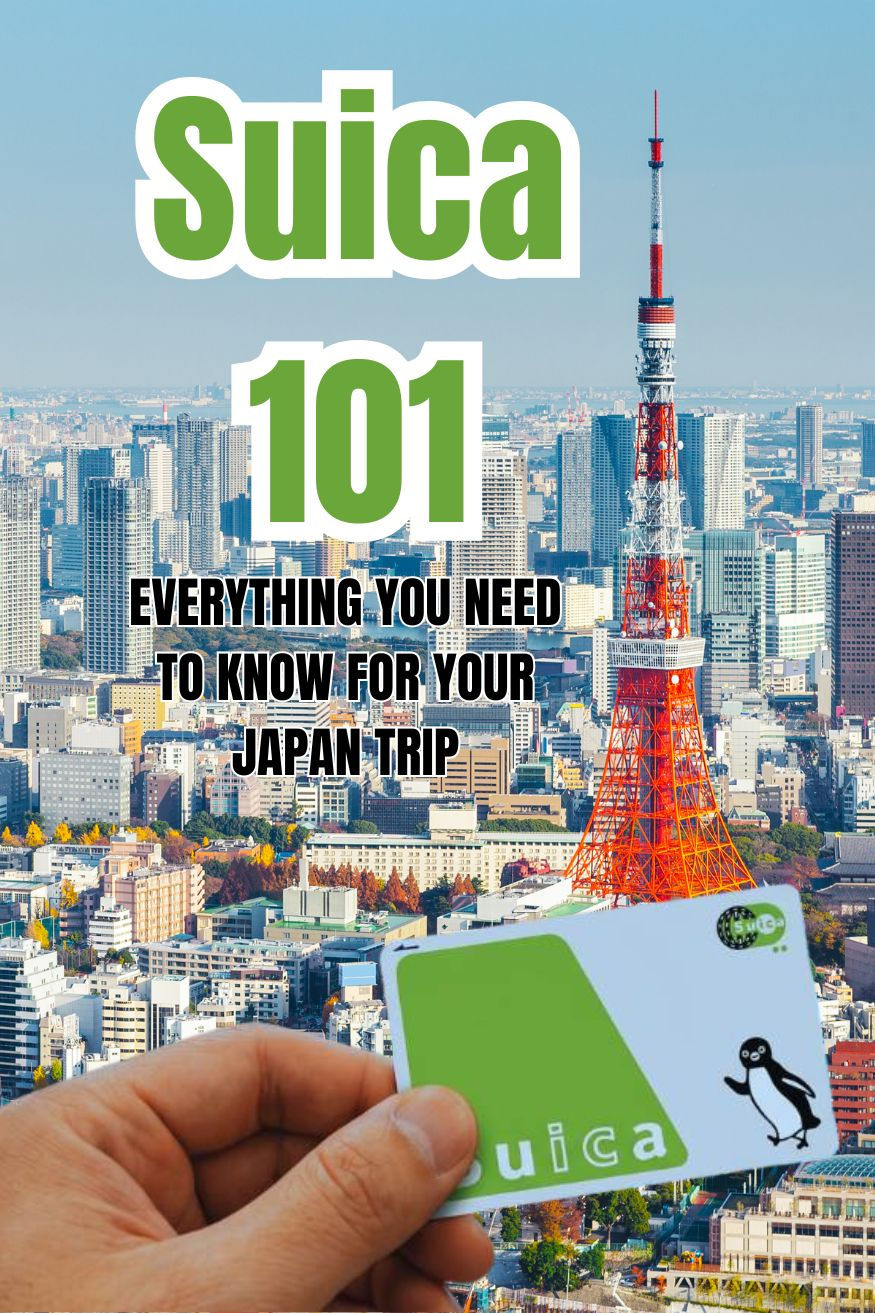
Collecting your Japan trip inspo on Pinterest? Hover over and click this pin to save it to your board
Want us to plan a Japan trip just for you? Need help putting together your first trip to Japan? Just get in touch.


Comments