What to do in Ginza, Tokyo: top 20 things that aren't luxury shopping!

Updated: Jun 19

The first time I remember going to Ginza (as opposed to wandering into accidentally) was around 18 years ago. I exited from the Metro and the first thing I saw was a giant H&M, and I thought, "This can't be right". I had expected a street lined with the world's top luxury brands and a Swedish fast-fashion, high-street retailer didn't fit my expectations. Confusion ensued. This was the days before Google Maps, remember.
Ginza has a reputation for being Tokyo's priciest neighbourhood, and that reputation is entirely earned. One square metre of land in the centre is worth tens of millions of yen. The brands lining the main drag - Chanel, Louis Vuitton, Hermès, Tiffany - are in no hurry to let you forget it. But you've also got Uniqlo, GU and even a Donki. The neighbourhood rewards wanderers and window-shoppers just as generously as it rewards actual shoppers. Here's how to make the most of it, without breaking the bank.
Disclosure: This post contains affiliate links. If you click through and make a purchase, I may earn a small commission, ♡ at no extra cost to you ♡ It helps cover the costs of keeping this site alive and we really appreciate your support
*Any prices quoted below are as of June 2026 and are subject to change
Best things to do in Ginza (in no particular order)
1. Walk Chuo-dori - especially on a weekend
This is honestly more fun than it sounds... and I can't explain why. The 1.2-kilometre main boulevard is the spine of Ginza, and on weekend afternoons it becomes fully pedestrianised - a practice the Japanese call Hokōsha Tengoku (Pedestrian Paradise). Not even bicycles are allowed. Essentially, it's just about being able to walk down the middle of this big street, but they put out chairs too and there's a really fun, festive atmosphere. I wouldn't necessarily say you should visit Ginza just for this but if you're going, try and time it with the Hokōsha Tengoku (noon to 5pm from October to March, noon to 6pm April to September)
Even on a weekday the architecture is worth your time. Look out for the iconic Wako clock tower at the famous Ginza 4-chome crossing - it's the unofficial symbol of the neighbourhood and one of the most-photographed spots in central Tokyo. We can also recommend going at night, when a lot of the stores and buildings are lit up.
2. Explore Ginza Six
Opened in 2017, Ginza Six is the neighbourhood's flagship shopping complex and genuinely worth a visit even if you're not planning to spend anything. The highlights for non-shoppers:
• The rooftop garden - free to access. On a clear day the views of central Tokyo are excellent.
• Tsutaya Books - a beautiful art-focused bookshop that's as much a gallery as a shop.
• The Noh theatre in the basement - Ginza Six has a genuine traditional theatre below a luxury shopping centre. Only in Japan.
TeamLab Planets runs a shuttle bus directly to their digital art museum in Toyosu from Ginza Six, making it easy to combine a visit to Planets with a day in Ginza. You can buy your tickets in advance from Klook.
3. Spend an hour at Itoya
Itoya is a stationery shop that's been in Ginza for over 120 years, and it spans twelve full floors. Each floor has its own theme - notebooks, pens, art supplies, origami paper, travel accessories. Even if you think you're not a stationery person, this place tends to convert you.
It's free to browse. Budget at least 45 minutes and go in with some self-control unless you want to leave with an armful of hand-crafted washi paper products, notebooks and pens you didn't know you needed.
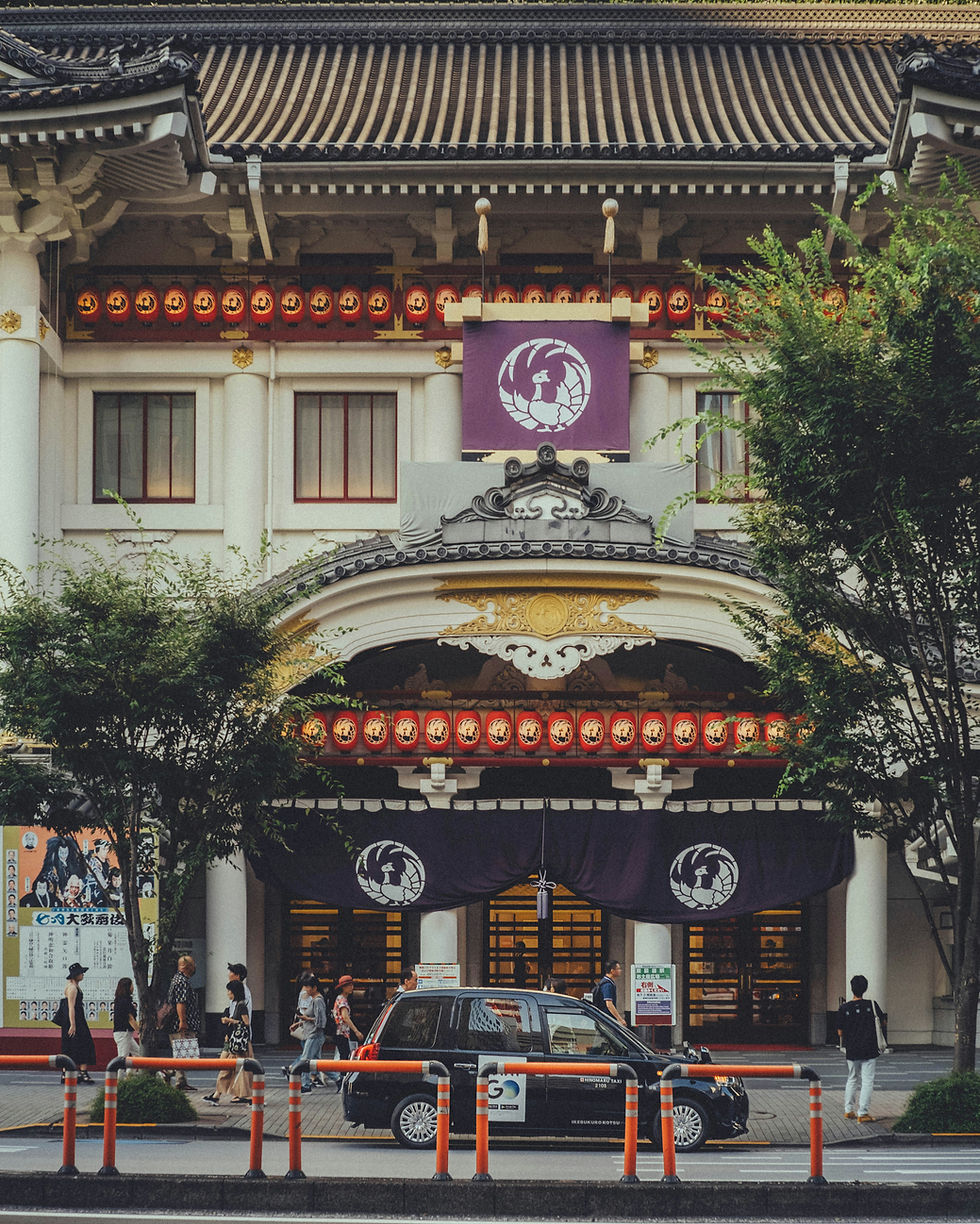
4. Catch a Kabuki Performance at Kabukiza
Kabukiza Theatre - right next to Higashi-Ginza station - is one of the best places in Japan to see kabuki, and it's more accessible than most people think. You don't have to commit to a full programme. Single-act tickets let you watch just one act (usually 30–90 minutes) for a fraction of the full-show price. You queue at the fourth-floor box office on the day — first come, first served. Tickets for one act can cost as little as 500 yen. English-language synopsis guides are available at the theatre so you won't be entirely lost. Kabuki is visual enough that even without understanding the dialogue- a bit like watching an opera in a language you don't speak.

5. Escape to Hamarikyu Gardens
A ten-minute walk south of Ginza's centre is one of Tokyo's most underrated green spaces. Hamarikyu was once the private duck-hunting grounds of the Tokugawa shogunate - the tidal pond at its heart still fills from Tokyo Bay, making it the only tidal garden in the city. Admission is 300 yen. Inside there's a traditional teahouse on the water where you can sit with matcha and look back at the skyscrapers of Shiodome.
6. Eat at a Michelin-starred restaurant... for less
Ginza has a concentration of Michelin-starred restaurants that makes the neighbourhood feel intimidating for food, but there are genuinely good mid-range options. Lunch sets at many of Ginza's high-end restaurants are a fraction of the dinner price. It's the standard Tokyo trick - same kitchen, dramatically lower bill.
Try ESqUISSE, for example, where you'll pay half as much for lunch as you would for dinner.
If you want to experience Ginza's food scene more systematically, a guided food tour is genuinely the best way to do it. The neighbourhood has enough hidden doors and unmarked restaurant stairs to make a local guide worth every yen. Klook makes it easy to make reservations at some top spots. Check out prices and availability here.
7. Explore the department store food halls (depachika)
The food halls in the basement floors of the iconic Mitsukoshi and Matsuya department stores are free to browse and great for picking up a picnic-style lunch or dinner, fancy delicatessen-type treats or exquisitely wrapped Japanese sweets or cookies - ideal as souvenirs. You'll find those 100-dollar melons down here and presentation boxes of strawberries or cherries, often just 12 or so to a box and costing the same as your hotel room for the night. Wandering around a depachika for an hour is one of my favourite free ways of getting in out of the rain or escaping the heat on an August day.
8. Go on an izakaya crawl through Yurakucho Sanchoku Yokocho
Move over, Golden Gai and Omoide Yokocho. Ginza has its own hidden alleyway of tiny bars and eateries: Yurakucho Sanchoku Yokocho (also known as Yurakucho Sanchoku Inshokugai). Same idea as its more famous counterparts - little after-work izakaya, yakitori joints, a few good Chinese-food places thrown into the mix. It's designed to be reminiscent of the old under-the-railway-tracks drinking haunts between Yurakucho Station and Shimbashi Station. We remember the original from the 1990s and this modern take is a lot more jolly and certainly less scary. From around 9 pm, it's a sea of black-suited salarymen having a drink and a bite to eat with their co-workers before heading home. It's less crowded if you go early, but to be honest, you're going for the atmosphere, not necessarily the food, so you need a bit of a crowd.
There are lots of little places the whole way along the tracks here. Head out and explore after a drink or two in Yurakucho Sanchoku Yokocho. Have a look at izakaya tours for a fun night out.
9. Tsukiji Outer Market
This one hardly needs an introduction, but view tourists realise that this famous market (once famous for its tuna auctions - which have since been relocated to the new fish market in Toyosu - and now a mecca for street food: the freshest sushi, the tenderest wagyu, the tastiest tamagoyaki...) is so close to Ginza. You can walk to it from central Ginza in about 10 minutes. This is strictly a morning activity, since most places are closed by 2pm. Read more in our Tsukiji guide.

10. Tsukiji Hongwanji Temple
While you're in the area, check out this really unusual temple just steps from the market. It's like no other temple you'll see in Japan, with a unique architectural style that borrows elements from temples in south-east Asia and even western churches. It always reminded me a little of the National Diet Building and I wouldn't be surprised if many tourists walk right past it without knowing what it is. Definitely one for the temple stamp hunters.
11. Caretta Shiodome
This is a hot tip if you're a fan of observation decks and we're surprised that not more tourists know about it. Like the Tokyo Metropolitan Government Building (that practically every tourist makes a bee-line for these days), this one is also free. Caretta Shiodome is a shopping, dining and entertainment complex with spectacular views over Hamarikyu Gardens, Odaiba and the rest of the Tokyo Bay area from the 46th floor "Sky View" observatory. There are restaurants on this floor too, with the same panoramas.
Caretta Shiodome is one of our top ten Tokyo observation decks. Find out what the others are here.
12. GinzaNovo (formerly known as Tokyu Plaza ginza)
If you're already familiar with the Tokyu Plaza buildings in Harajuku, Harakado and Omokado, you'll instantly feel at home here in GinzaNovo. The architecture is true to Tokyu Plaza form and is especially vibey at night. GinzaNovo is a shopping complex with almost 80 shops and restaurants - nothing outstanding in a city of shopping complexes - but, like its cousins in Harajuku, the jewel in the crown is the rooftop terrace, called The Mint Ginza and described by Tabelog at least as Japan's largest rooftop bar. It even has a pool (a very shallow one, not for swimming, but a cool feature nonetheless). This is the sort of place you want to chill in for a few hours on a summer night. They even have all-you-can-drink barbecue packages.
13. Art Aquarium Ginza
Looking for an indoor activity on a hot summer's day or when it's bucketing down in the rainy season? The Art Aquarium in Ginza is exactly what it says it is: part art installation, part aquarium. Wander among glass columns filled with tiny jellyfish, and wonder at how many types of goldfish there really are. Lots of black-light, extremely aesthetic, and somehow very chill. You can buy your tickets online here in advance.
14. Ghibli clock
A little ways south of Shimbashi Station is a huge clock on the side of the NTV Building, unshockingly called the NTV Big Clock but unofficially known as the Ghibli Clock, since it was designed by the father of Ghibli, Hayato Miyazaki. Reminiscent of European glockenspiele, this clock also comes to life several times a day. You can catch this Monday-Friday at 12 noon, 1 pm, 3 pm, 6 pm. and 8 pm and at 10 am, 12 noon, 1 pm., 3 pm., 6 pm., and 8 pm at weekends.
15. Sukiyabashi crossing
Not to be outdone by Shibuya, Ginza has its own "scramble crossing". Sukiyabashi crossing is one of the busiest in the world, but it doesn't draw the same crazy vlogging tourists that Shibuya does. Go up to some of the higher floors or the rooftop of GinzaNovo for great views.

16. Tokyo International Forum
Just to the north of Yurakucho Station, Tokyo International Forum is a multi-purpose exhibition centre and it regularly hosts art shows, performances and concerts. But we think it is worth dropping by for the architecture. It's an amazing space inside and when we were there last, there was a film crew using it as a backdrop for a TV drama. Also worth mentioning: The Tokyo International Forum is also the venue for the "largest outdoor antique market in Japan", Oedo Antique Market. It's generally held twice a month (not in August, because it's too hot!). We bagged several gorgeous antique kimono last time we were there. Check the dates for the upcoming months on the Oedo Antique Market website.

17. Uniqlo flagship store
As we said at the start, Ginza has this ingrained image of being all about the luxury brands but for the average tourist this is where you fill your shopping bags. And even if you don't, it's worth dropping by to see the iconic Uniqlo displays, such as the famous swinging t-shirts. It's here, too, that you can have your Uniqlo goods - bags, t-shirts, sweatshirts - customised with embroidery or digital prints.
18. Ginza Lion Beer Hall
Opened in 1934, the Ginza Lion Beer Hall is Japan's oldest and still retains that Mitteleuropean charm. As you would expect, the menu features solid German fare like sausage and Eisbein but also karaage, "Burgundy-style" whelk, pizza and fish & chips. So, something for everybody. It recently became a listed building and it's well worth dropping in for a quick whelk just to soak in that 1930s Tokyo-meets-Munich atmosphere.
19. Hibiya Park
When you've seen enough of the concrete jungle, zip over to Hibiya Park for a break. The park has plenty of places to sit down, little ponds, a fountain and several historical markers. It's a favourite cherry-blossom-viewing spot in the spring and known for its autumn foliage in late November / early December. There are often live music performances in the park in summer.
20. Imperial Hotel
Tokyo's Imperial Hotel calls itself "one of Tokyo's most legendary hotels" and it has more than 130 years of history to look back on. Now, staying in the hotel is not a budget option but it's definitely worth taking in the grand lobby and maybe even having a drink or a meal in one of its lounges or restaurants. It can make a lovely, special day or evening out. We can highly recommend the afternoon tea in the Imperial Lounge Aqua - the menu and the theme changes every month or so - and the Kamon teppanyaki restaurant on the 17th floor.
Thinking of staying in Ginza? Great choice! Find out in our Ginza accommodation guide why we recommend Ginza as one of the best neighbourhoods to stay in Tokyo and which areas in particular make a great base for your Tokyo trip.
Getting there – where is Ginza?
Ginza is incredibly well-connected, making it super easy to reach from virtually anywhere in Tokyo.
Nearest station: The central hub is Ginza Station (銀座駅), served by the Tokyo Metro Ginza Line, Marunouchi Line, and Hibiya Line. You can also easily access the district from Higashi-Ginza Station (東銀座駅) on the Tokyo Metro Hibiya Line and Toei Asakusa Line, or Ginza-Itchome Station (銀座一丁目駅) on the Tokyo Metro Yurakucho Line.
By taxi: Taxis are plentiful in Ginza and can drop you off exactly where you need to be.
Accessibility: Ginza boasts wide, flat pavements, making it very accessible for wheelchairs and strollers. Its modern department stores and shopping complexes are all equipped with numerous elevators and escalators, ensuring easy navigation.
Opening hours & best time to visit
Most shops in Ginza typically open between 10:00 am and 11:00 am and close around 8:00 pm or 9:00 pm. Department stores like Ginza Mitsukoshi and Matsuya Ginza generally follow similar hours. Restaurants and bars, especially fine dining establishments, will often open later and stay open well into the night.
The pedestrian paradise at the weekends is a great time to visit, simply because it feels so festive and it's great for people watching. But it also draws the crowds, so you can expect shops, restaurants and bars to be fuller too.
We love being in Ginza in the evening. As dusk falls, Ginza's luxury stores illuminate, creating a dazzling display of lights. It's a fantastic time for window shopping and to experience the district's sophisticated nightlife.
Ginza FAQs
Is Ginza worth visiting if I'm not a big shopper?
Absolutely. The pedestrianised weekend promenade, Kabukiza, Itoya, Ginza Six's rooftop, and Hamarikyu Gardens give you a full, rewarding day with almost no money spent. Ginza is one of those neighbourhoods where just being there is the activity.
How do I get to Ginza?
Ginza is one of the best connected districts in Tokyo. Take the Tokyo Metro Ginza Line, Marunouchi Line, or Hibiya Line to Ginza Station — you'll emerge right in the heart of it. From Tokyo Station it's one stop on the Marunouchi Line, or about a 15-minute walk. You can also take the Yamanote to Shimbashi, which is at the lower end of Ginza.
When is Chuo-dori pedestrianised?
Weekend afternoons and some public holidays, noon to 6pm (5pm from October through March).
Can I get single-act kabuki tickets on the day?
Yes - the fourth-floor box office at Kabukiza sells them on the day. Prices and availability vary by programme, so check the official Kabukiza website before you go. Get there early for popular shows.
Is Ginza good for families?
Yes, more than you'd expect. Hakuhinkan Toy Park - a multi-storey toy emporium a few blocks from the main crossing - is excellent. Hamarikyu Gardens is beautiful for kids to run around in, and the Art Aquarium Museum in Mitsukoshi is a crowd-pleaser.
Is Ginza Tokyo expensive?
Ginza is famous for its luxury shopping and Michelin-star restaurants. You can definitely empty your wallet here but there are plenty of budget options too. Accommodation isn't the cheapest in Tokyo but there are plenty of mid-range business hotels.
Is Ginza a walkable area?
Yes. Not only is Ginza a very well-connected area (meaning you don't have to walk too far to or from the nearest train or metro station. The streets are all pretty flat and well-paved too.
Is Ginza a good area in Tokyo?
Ginza is considered an up-scale area in Tokyo and is a good area for first-timers and families, for example. It's safe, quiet but not too quiet: there's plenty to do in the evenings. It's also best-placed on several train and subway lines, making it easy to reach from everywhere in Tokyo.
Ready to explore what Ginza has to offer? Our 3-Day Tokyo Itinerary guides you through the best of Ginza and the surrounding districts, for a day full of discovery and fun!


Comments