Best time of year to visit Hakone and when to avoid

Updated: Sep 27

We learned the hard way that catching a glimpse of Mount Fuji in summer in Hakone meant getting up at the crack of dawn and that the autumn foliage here was done and dusted by the time it was just getting started in Tokyo. I honestly don't think that anybody is going to plan the timing of their Japan trip around a visit to Hakone, but I definitely have a few tips on the top seasons for visiting this gorgeous mountain onsen retreat and when it might be better to leave it off your itinerary.
Disclosure: This post contains affiliate links. If you click through and make a purchase, we may earn a small commission, ♡ at no extra cost to you ♡ It helps cover the costs of keeping this site alive and we really appreciate your support
*Any prices quoted below are subject to change
Winter: onsen and Mount Fuji
Day-trippers might find winter in Hakone a bit too cold to really enjoy the outdoor attractions but we really rate winter for a couple of reasons. First of all, this is the best time to get great views of Fuji: the clearer, colder air means Mount Fuji reveals itself more often and it also has its snowy hat on, which makes for the most iconic photos. Also, because it's cold but clear, there's less chance of being bothered by rain. Secondly, there are fewer day-trippers around ;) This means that attractions and public transport are much less crowded than in summer or peak autumn-leaf times.
Winter is also onsen season. While hot springs flow year-round, there's nothing nicer than soaking in steaming water while snow (or the threat of it) hangs in the crisp mountain air. Hakone is an onsen resort after all and this is the best time of the year to experience the hot springs. There are day-visit onsen too, of course, but if you're making an overnight stay of it, we can absolutely recommend visiting in winter and booking yourself a hotel or ryokan in Hakone with its own onsen.
A wee word of warning. The roads around Hakone can be treacherous when the temperatures drop and if there is snow. Visitors not used to winter driving conditions should think twice before renting a car for their Hakone trip.
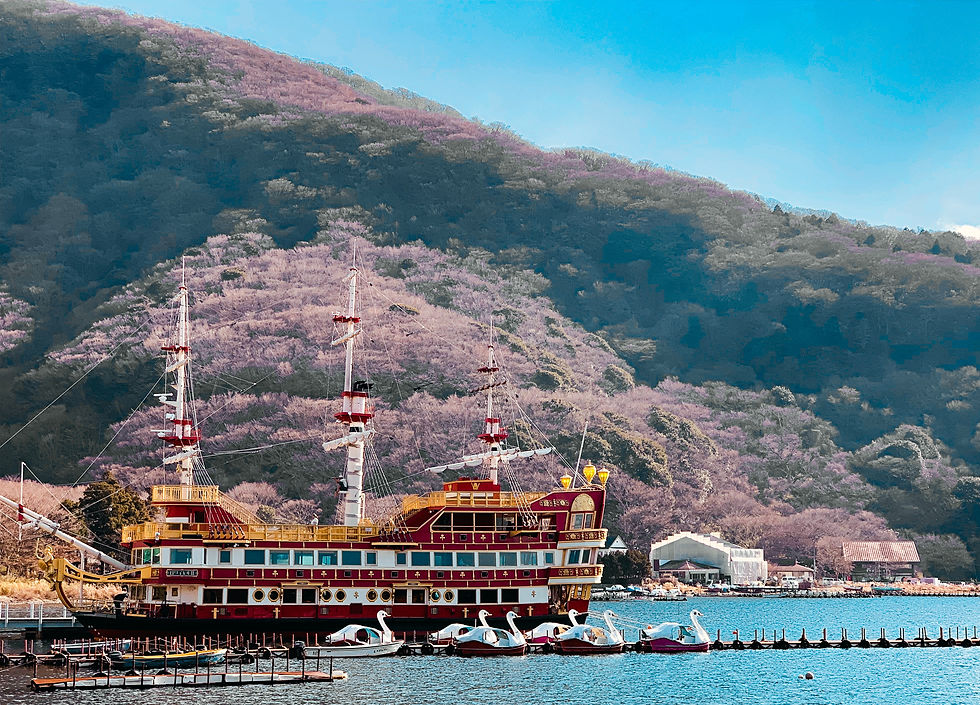
Spring: cherry blossom and azalea gardens
I'll be honest: Hakone is not somewhere I would necessarily go just to see cherry blossoms. It's more like a bonus if you happen to catch them when you are there but not a reason to visit - there are better places.
For us, the spring highlight is definitely the Azalea Fair in early May in the legendary azalea and rhododendron garden at Hotel de Yama - the whole 130,000m² garden is an explosion of red, pink and purple blooms framing perfect views of Lake Ashi and Mount Fuji. The gardens open to public visitors for a day pass during the Azalea Fair. A second gem is the historic azalea garden at Kowakien, which has been cultivated since 1909 and offers a quieter, more intimate experience.
The trade-off? The weather is spring can be very unpredictable. Hakone's geography means that mist and rain can funnel in at any time. And it can be colder than you might expect as well. I remember being in Hakone on a day trip from Tokyo with our eldest kid who was around 10 months old at the time. We had to wrap her in every extra layer we had with us because it was much, much colder than Tokyo. Also, late April around Golden Week is genuinely crowded, so timing matters.
Summer: festivals & fireworks
Like basically anywhere else in Japan, summer in Hakone is hot and humid, but less so than the cities, so we can recommend it as a retreat from the stifling heat of Tokyo. Because Hakone sits at higher elevation than Tokyo - roughly 700+ meters depending on the area - it's noticeably cooler and there's a bit more of a breeze. August can get a little crowded because it's peak holiday time for both domestic and international tourism but the added bonus of the Kosui festival in the first week of August, with fireworks over the lake and lots of the typical summer matsuri attractions, makes up for it. If you happen to be in Hakone around the 13th of August, you'll get to enjoy Obon there, with fires being lit up in the shape of kanji on the mountainside.
We were in Hakone a few summers ago in July and didn't find it too crowded at all. We also caught the end of the hydrangea season, which was lovely. I would highly advise you to bring anti-mosquito spray with you, though, and douse yourself liberally before heading outdoors!
Autumn: autumn leaves, changeable weather
This is my favorite time to visit Hakone, and I'm not alone - autumn foliage season really is peak season here. But here's the insider advantage: Hakone's leaves turn one to two weeks earlier than Tokyo's. If you're planning a broader Kanto trip and worried you're arriving too early for the typical autumn leaves, Hakone is your answer.
The weather is capricious, though. Your best chance of getting good views of Mount Fuji are in the early morning but improve in later autumn as the humidity drops. Plan for every eventuality: I mentioned in one of our other Hakone posts that, on a visit to Owakudani, we were admiring the gorgeous views in full sunshine one minute and couldn't see our hands in front of our faces 10 minutes later! Hakone's topography means that this is a possibility at any time of year but is associated with shocking drops in temperature in autumn especially.
One highlight in autumn is the Daimyo Goretsu festival on November 3. A huge procession of participants in period samurai and geisha costume in the Yumoto area reenacts Hakone's feudal history.
Is autumn the best time to visit Hakone? One of the best, definitely, but it comes with a catch: accommodation and tours book up well in advance, and prices reflect the demand. If autumn is your target season, book early.
When NOT to visit Hakone
If you've read our bucket-list of the best things to see and do in Hakone, you'll have realised that most of Hakone's attractions are outdoors: hiking, lake tours, temple visits, garden strolls, the aptly named Hakone Open-Air Museum. Persistent rain makes these activities less enjoyable, and mountain mist can completely erase Mount Fuji views, so we avoid visiting during the tsuyu. If you are determined to visit Hakone during the rainy season (end of May to beginning of July), you'll still find plenty to do and this time of year can be so beautifully atmospheric as well. But pack the appropriate rain gear, be aware - especially if you're hiking - that some trails may be closed, and be prepared to get a bit damp.
Best time of year to visit Hakone: FAQ
What's the best month for clear Mount Fuji views?
December through February, particularly on clear mornings. Autumn (October–November) is also reliable. Avoid the rainy season entirely; and even in good seasons, Mount Fuji is visible only about 50% of the time on average.
Is Hakone worth visiting if I'm only interested in hot springs?
Absolutely. Winter is the peak onsen season - imagine soaking outdoors while the mountain air is crisp and clear. But you can enjoy excellent onsen experiences year-round; just know that facilities will be busier in autumn and peak season.
When should I visit if I want to avoid big crowds?
Winter (January–February, outside of New Year holidays) and early summer (June) tend to be quieter. Spring around Golden Week (late April/early May), Obon in August and October autumn are peak - book accommodations far in advance if visiting at these times are your only option.
Need more information for planning your trip to Hakone? Check out our other Hakone posts:
Our hub post is your quick and easy intro guide to Hakone
Wondering if you're going to need a car for Hakone? Our Hakone transportation guide sets out all of the public transport options and our Hakone FreePass FAQ will help you decide if this special discount ticket is something to consider.
With so much to see and do in Hakone, staying overnight is always a good idea but accommodation is very spread out. Our Hakone accommodation guide explains where the best spots to stay are.
Just in case you're undecided: here's why we think a trip to Hakone is definitely worth it but why some visitors may want to save it for next time.
One of the highlights in Hakone, read our guide to the Hakone Open-Air Museum to decide if you should include a visit on your trip to Hakone
And don't miss our guide to the best things to see and do in Hakone, whatever the season.
Planning a one-day trip to Hakone from Tokyo? We have the perfect itinerary and tips on how to get there.

Collecting your Japan trip inspo on Pinterest? Hover over and click this pin to save it to your board
Want us to plan a Japan trip just for you? Need help putting together your first trip to Japan? Just get in touch.


Comments