Best Kyoto temples and shrines you didn't know about - 8 hidden gems

Updated: Sep 27

Disclosure: This post contains affiliate links. If you click through and make a purchase, I may earn a small commission, ♡ at no extra cost to you ♡ It helps cover the costs of keeping this site alive and we really appreciate your support
*Any prices quoted below are subject to change
Here are 8 of the best temples and shrines in Kyoto that most tourists completely miss.
It's no secret that Kyoto is severely overcrowded with tourists, and, seeing those videos of jam-packed streets and buses, many visitors to Japan are starting to wonder if putting Kyoto on their itinerary is worth it at all.
We were lucky enough to first get to know Kyoto back in the 90s, when Fushimi Inari was practically empty all the time and the bamboo forest was almost spookily lonely. Those days are gone but Kyoto still has a wealth of gorgeous temples and shrines that most tourists miss and where you can still experience serenity, zen and that old, pre-tourist-boom Japan. Here's our list of hidden-gem Kyoto temples and shrines: visit them before they too become popular!
Here's a quick summary before we get down to the nitty-gritty:
Temple / Shrine | Area | Admission | Special features |
Otagi Nenbutsu-ji | Arashiyama | ¥500 (adults & children 10+) | Quirky moss-covered stone figures, forest atmosphere |
Gio-ji | Arashiyama | ¥300 adults / ¥100 children | Stunning moss garden, cherry blossom & autumn colour |
Honen-in | Philosopher's Path | Free (main hall: small fee in April & November) | Peaceful thatched gate, raked sand mounds, near-zero crowds |
Enko-ji | Ichijoji | ¥600 adults | Zen garden views, panoramic Kyoto skyline, bamboo grove |
Shimogamo-jinja | Demachiyanagi | Free | Ancient forest, water fortune shrine, neighbourhood feel |
Genko-an | Takagamine | ¥400 / ¥500 in autumn | Round & square windows, bloody samurai ceiling, autumn leaves |
Kifune-jinja | Kibune (north) | Free | Red lantern staircase, summer river dining, water fortune |
Sanzen-in | Ohara (north) | ¥700 adults | The best moss garden in Kyoto, smiling Jizo statues, crisp mountain air |
Otagi Nenbutsu-ji

This temple is tucked away in a corner of Arashiyama, beyond the bamboo forest in a scenic spot still overlooked by most day-trippers. It is famous for its 1200+ moss-covered stone "rakan" figures, all different and many with comical expressions or holding accessories like a tennis racket or a Walkman. But the temple complex also offers beautiful architecture, a centuries-old main hall, a small pagoda, and all in an amazing Ghibli-like forested setting.
Photogenic Otagi Nenbutsu-ji is just starting to do the rounds on social media so visit before it gets too popular! And don't forget to ring the bells for good luck before you leave.
Getting there: Otagi is a bit of an uphill hike, so the best way to get here is to take Bus No. 62, 92 or 94 from Hankyu Arashiyama station or from Arashiyama Tenryuji-mae (direction of Kiyotaki). The bus takes around 25 minutes but stops right in front of the temple. It costs around 230 yen for adults. Alternatively, a taxi will take only 5 minutes from the centre of Arashiyama and will cost around 1500 yen.
When to visit: Open 9am to 4:15pm but closed Wednesdays and Saturdays. Our tip: a rainy day somehow makes this temple all the more charming and atmospheric.
Admission: 500 yen for adults and children age 10+
Gio-ji

Also in Arashiyama, not far from Otagi Nenbutsu-ji and the famous bamboo forest, is the gorgeous but often forgotten Gio temple. Though it has a rich history (and was mentioned in the 13th century Tale of the Heike), all that is left of the temple buildings is a former nunnery with a modest thatched roof, where the temple's namesake, a dancer named Gio, is said to have lived after falling out of favour with her patron. The temple's main attraction is its stunning moss garden, complete with little stone lanterns, cherry blossom trees that dust the ground with sakura petals in spring and Japanese maple trees that burst into colour in autumn. There's even a little bamboo grove.
Getting there: You're going to have to invest a little energy into getting to Gio-ji. It's a 20 minute walk from the nearest bus-stop but a taxi can get you to within about 50 metres of the entrance.
When to visit: Open 9am to 4:30pm. Our tip: the rainy season in June is always a great time to see moss gardens at their absolute best.
Admission: 300 yen for adults, 100 yen for children (including high-school students)
Honen-in

Tucked away in the forest near the Philosopher’s Path, Honen-in is a sanctuary of peace and serenity. Founded in 1680 to honor the priest Honen, this Kyoto temple is famous for its unique entrance: a rustic thatched gate that leads you past two sand mounds (Byakusandan). The monks meticulously rake seasonal designs, like maple leaves or waves, into the sand, symbolising the purification of the mind before entering sacred ground. The locals love this temple for its understated, mossy beauty, the small, hidden pond tucked behind the main hall... and the distinct lack of tourists!
Getting there: It is about a 10-minute walk from the Jodo-ji or Ginkakuji-michi bus stops and makes a super detour if you are already walking the Philosopher's Path.
When to visit: Open 6am to 4pm. Our tip: Late November is great timing because the maple trees frame the gate in bright reds and oranges.
Admission: Free to enter the grounds (the main hall is only open to the public during the first weeks of April and November for a small fee).
Enko-ji

Located in the northern Ichijoji district, Enko-ji is a hidden gem that was once a school established by the shogun Tokugawa Ieyasu. Today, it is celebrated for its Jugo-no-niwa (Garden of Ten Cows), a stunning Zen landscape designed to be viewed like a living painting from the temple’s wooden veranda. If you have the energy, follow the path up the hill behind the temple to find a small cemetery and a lookout point that offers a breathtaking, panoramic view of the Kyoto skyline. Enko-ji also has a small bamboo grove for that quintessential Japanese vibe without the Arashiyama crowds.
Getting there: Take the Eizan Railway to Ichijoji Station, followed by a 15-minute walk. Alternatively, take bus number 5 to the Ichijoji Sagarimatsu-cho stop.
When to visit: Open 9am to 5pm. Our tip: This is one of the best spots in the city for momiji (autumn colours) and popular for that reason among the locals. During momiji season, you have to make a reservation (email address on homepage) and there may be increases in the admission price.
Admission: 600 yen for adults.
Shimogamo-jinja

As one of the oldest shrines in Kyoto (dating back to the 6th century), Shimogamo is a UNESCO World Heritage site that somehow maintains a local, neighbourhood feel. It sits at the fork of the Kamo River, surrounded by the Tadasu no Mori, a 30-acre "Forest of Correction" that has never been logged and is a welcome shady spot on a hot summer's day. The huge, crimson 2-storey gate is the highlight Look out for the Mitarai-sha, a small sub-shrine over a stream where people soak "water fortune" slips to reveal their future.
Although Shimogamo is surprisingly (relatively) low on visitors on an average day, two annual events bring the tourists (both domestic and overseas) thronging: the yabusame horse-back archery contest every 3 May and the Aoi Matsuri, also in May and one of Kyoto's big three festivals.
Getting there: A 10-minute walk from Demachiyanagi Station (Keihan Line), or take bus number 4 or 205 to the Shimogamo-jinja-mae stop.
When to visit: Open 6:30am to 5pm. Our tip: If you're coming from Osaka, take the Keihan line (Yodoyabashi station) early in the morning and make this shrine your first stop.
Admission: Free to enter the main grounds.
Genko-an
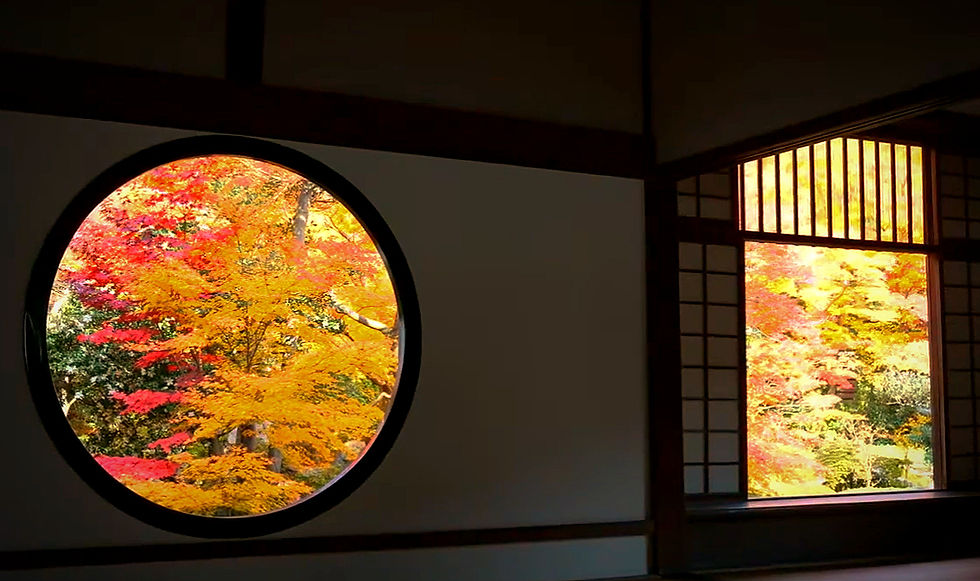
Located off the beaten path in the quiet hills of Takagamine, Genko-an has a bit of a bloody history but still has a serene beauty that makes it very much worth a visit. The temple is famous for two windows: the "Window of Confusion" (square, representing human suffering and life's obstacles) and the "Window of Enlightenment" (round, representing the universe and a clear mind). Look up while you're there - the ceilings are made from floorboards of the dismantled Fushimi Castle, still stained with the blood of samurai who committed ritual suicide during a 1600 siege. You might even spot a bloody footprint or two! The gardens are gorgeous in summer and autumn in particular, making the temple an amazing autumn-leaf viewing spot (framed by those windows) and a photographer's dream.
Getting there: Take the Karasuma Subway to Kitaoji Station, then catch bus number 6 to the Genko-an-mae stop.
When to visit: Open 9am to 5pm. Our tip: Although unbusy for most of the year, the autumn-leaf season (late November) sees visitor numbers explode at this temple. Get there early to appreciate the gardens without the crowds.
Admission: 400 yen (500 yen during the peak autumn season).
All of the Kyoto temples and shrines above are easily accessible within the city/Arashiyama but we have a few more that we think should definitely make the list although they are a little harder to get to:
Kifune-jinja

Located in the forested village of Kibune, this shrine is dedicated to the god of water and is one of the most photogenic spots in all of Japan. The iconic approach features a long stone staircase lined with vibrant red wooden lanterns that look magical in any season—whether surrounded by lush summer green or capped with winter snow. Kifune is also the birthplace of Ema (votive tablets) and offers a unique "water fortune" (Mizu-ura Mikuji) where the text on your fortune slip only appears when you float it in the shrine's sacred spring.
Getting there: It’s a bit of a journey - usually a train to Kibuneguchi Station followed by a short bus or a 30-minute walk through the forest. Consider taking a tour to save you some time. Click here to check availability and prices
When to visit: Open 6am to 6pm (until 8pm in summer/autumn). Our tip: Visit in summer to experience Kawadoko dining, where restaurants build platforms directly over the rushing river to keep diners cool.
Admission: Free to the grounds.
Sanzen-in

If you want to see the "ultimate" Kyoto moss temple, Sanzen-in in the rural village of Ohara is the place. This massive temple complex feels like a separate world. The highlight is the Ojo Gokuraku-in Hall, which sits in a sea of thick, velvet-green moss dotted with tiny, smiling stone statues known as Warabe Jizo (child-like monks). Because it's about an hour north of the city, the air is crisper, the crowds are thinner, and the atmosphere is deeply meditative.
Getting there: Take the Kyoto City Bus (Route 17) from Kyoto Station or Sanjo Keihan to the Ohara bus stop (around 1 hour 20 mins), then enjoy a 10-minute walk past local craft shops. Since this temple is totally worth visiting but requires a bit of a time investment on public transport, consider taking a tour. Klook has one that includes Sanzen-in AND Kifune shrine. Click here to check availability and prices.
When to visit: Open 9am to 5pm. Our tip: The hydrangea garden here in June and July is spectacular and far less crowded than the more famous spots in the city.
Admission: 700 yen for adults.
So don't let the crowds put you off: Kyoto is a city of layers, and while its famous landmarks are iconic for a reason, its true magic often hides in the quiet moss of a nunnery or the shadow of an ancient mountain shrine. Stepping off the beaten path allows you to experience the "Old Kyoto" that travelers have fallen in love with for centuries - without the shoulder-to-shoulder crowds.
Our travel tip: While the central temples in Kyoto are easy to reach on foot, gems like Kifune and Sanzen-in are tucked high in the northern mountains. To save yourself the stress of navigating multiple mountain buses and trains in a single day, we highly recommend booking a guided day tour like this one from Klook. It’s the most efficient way to see these remote wonders in one go, leaving you more time to actually enjoy the scenery!
Spending time in Kansai on your Japan trip? Here are some more posts you might find useful:


Comments