What to see and do in Kobe city, Japan - the definitive list

Disclosure: This post contains affiliate links. If you click through and make a purchase, we may earn a small commission, ♡ at no extra cost to you ♡. It helps cover the costs of keeping this site alive and we really appreciate your support. Any prices quoted below are subject to change.

Just 20 minutes from Osaka is a city that is considered in Japan to be one of the country's most beautiful, most cosmopolitan. A popular hotspot for domestic tourism, for gourmets, for romantic dates. Yet most tourists know it only as the home of Kobe beef. As former residents of Kobe and die-hard fans of the city, we're about to give you a lot of reasons to put Kobe on your Japan itinerary for a day or, even better, a couple of nights!
What to see and do in Kobe city
As former locals, we can assure you that there's enough in Kobe to fill any tourist's itinerary. Here are the must-sees plus a load of things that you won't necessary find in other Kobe guides but that we found interesting. Click on the gold links to go to our dedicated posts for the respective attractions and bookmark our Kobe map, where we have everything on this list marked for you.
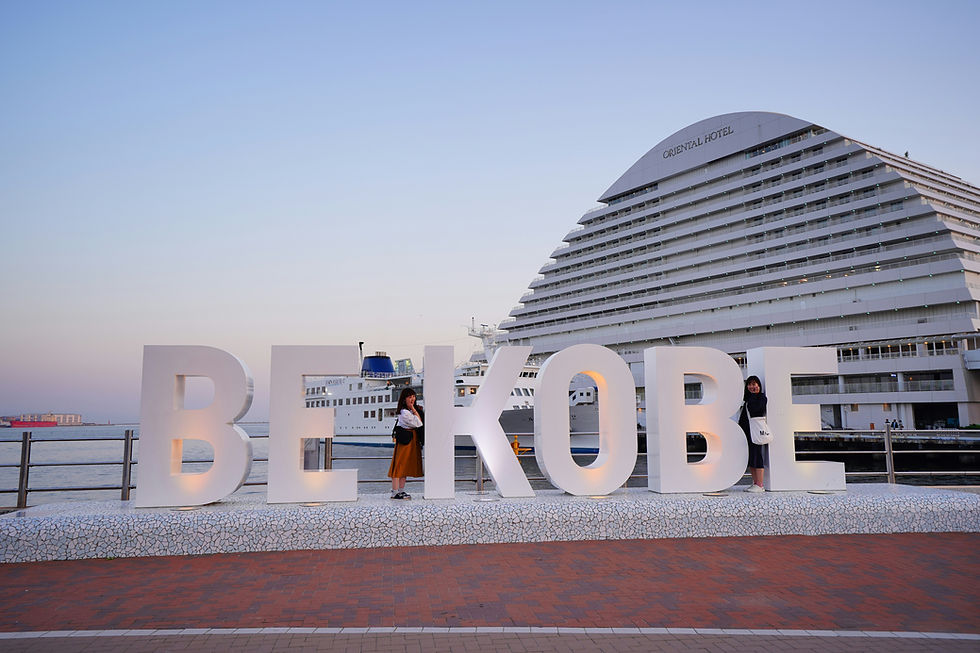
With its iconic architecture, Meriken Park is probably what everybody first thinks of when they picture Kobe in their mind. The beautiful open spaces and lawns provide great views over the bay and the city. Don't forget to snap a photo with the "BE KOBE" monument, which was created for the 20th anniversary of the earthquake. Perfect for an evening stroll.
If there is one landmark that says "Kobe" more than any other, it's Kobe Port Tower. The striking red and white drum-shaped (apparently) tower offers 360° views of the city, the mountains and the bay from its viewing platform but its also very instaworthy from below, especially after dusk, when it's illuminated.
Kobe Maritime Museum
The distinctive white sail-like structure beside Kobe Port Tower that you'll know from every picture of Kobe's waterfront is on the roof of the Kobe Maritime Museum. As the name suggests, the museum is dedicated to all things shipping and port related, but is also something for motorbike fans, since Kawasaki Industries has an exhibit here too.
Earthquake Memorial Park
A small section of the quay left exactly as it was after the 1995 earthquake that devasted Kobe and killed 6000 of its residents. The port of Kobe was one of the world's busiest before the earthquake; it took many years to recover and has never quite made it back to pre-1995 capacity. The memorial park is a poignant reminder of how everything changed for Kobe in a matter of seconds.
Kobe bay cruise
We've gone on these boat trips so many times and never get tired of them. Especially on a fine day, the scenery is breathtaking, with Akashi Kaikyo Bridge just down the coast, Osaka on the other side of the bay and the man-made islands of Port Island, Rokko island and Kobe Airport in between. Nor will you get any better view of Meriken Park with Port Tower, the Maritime Museum and the green-velvet Rokko Mountains rising up behind the city. You have lots of different options here: some cruises are a simple bay loop, others are with lunch or dinner. The sunset cruises are especially romantic but book up quickly. Click on the button below to check availability and prices:

Harborland & Umie Mosaic
Harborland and the adjacent waterfront Umie Mosaic are huge shopping and entertainment complexes. Harborland is indoors, whereas parts of Mosaic are open to the elements. Mosaic, in particular, has a lot of cute little boutiques, character goods shops, restaurants and cafés, and of course you get lovely views too. Harborland is directly connected to Kobe Station on the JR line, making it easy to get back to central Kobe with all over your shopping. The illuminated ferris wheel you might have seen in photos of Kobe is in Mosaic.
Kitano Ijinkan (Foreign Houses)
If you get enough Western architecture at home, you might not think that wandering around the former foreign merchant district is worth your while, but Kitano is really a lovely area. It's number 1 on every Japanese visitor's Kobe itinerary because of the exoticism of the 19th-century mansions built by foreign merchants and the quaint little streets. But this hillside district also appeals to foreign tourists, for historical reasons - if that's your thing - but also because the whole place is so cute! Some of the residents have been turned into little shops, some into cafés, other preserved as museums. The Weathercock House is a standout, but honestly, just getting lost in the narrow, steep streets is half the fun.
If these old houses, built and lived in by Kobe's first Western residents, fascinate you as much as they do me, you'll find another one in Port Island Kita Park (rarely open to the public but still lovely from the outside) and one in Oji Koen.

The Herb Gardens and Kobe Ropeway are considered by many to be the highlight of any trip to Kobe. The ropeway whisks you up over the mountainside to the top of the Herb Gardens, where you can take in the views over the city before either taking the ropeway back down or walking down through the gardens, taking in the iconic glasshouses on the way. Buy your tickets in advance from Klook (click here to check availability) to save waiting in line for a gondola.
Nunobiki Falls
Tucked away on the mountainside just below the Herb Gardens and a little ways up from Shin-Kobe Station are the Nunobiki waterfalls -a series of four. While not spectacularly high or broad, the wooded setting makes it feel quite magical and they are considered to be some of the most beautiful in Japan. You'll pass the falls if you walk the whole way down to Shin-Kobe from the Herb Gardens.

Ikuta Shrine
Hidden right in the middle of the neon-lit Sannomiya district, this is one of Japan's oldest shrines and is considered to be ground zero for the city of Kobe. The main shrine building collapsed completely during the Great Hanshin-Awaji Earthquake and the sight of its roof lying intact but on the ground became something of a symbol for the devastation experienced by the city.
Thankfully, the shrine has been completely rebuilt, but it's still largely unknown by tourists... which is a pity but also means that it's rarely crowded. Ikuta is known as a shrine to wish for love and a happy marriage, so you'll find lots of heart-shaped charms and ema, which is cute, and even special water-activated love fortunes. The wooded area behind the shrine is a lovely peaceful place for a little break.
The Nada sake district
Don't leave Kobe without sampling the local sake. Kobe produces more sake than anywhere else in Japan and the Nada sake district is the ideal place to take a tour of the traditional distilleries and find your favourite. Click here to check out guided tours and tasting with local experts.

Nankinmachi (Chinatown)
One of Japan's "Big Three" Chinatowns. It’s small but packed with energy - perfect for street-food hopping (look for the long line at the butaman pork bun stands!). If you're here at the right time, there are big Chinese New Year celebrations but the lantern-lit central square is atmospheric at any time of year. Can get very crowded at lunchtime and dinnertime at weekends especially. I love visiting Nankinmachi in the winter just before the lunchtime crowds arrive and the vendors are getting their goodies ready - it's buzzing, vibrant and the steam is flying left, right and centre!

Kanteibyo Tao temple
I once spent a good hour an more wandering around the tiny, hilly streets of the Nakayamatedori area of Kobe looking for this temple. This was pre-Google maps, mind you, but not even the locals I stopped along the way had heard of it. This little gem of a temple is a burst of colour and is representative of Kobe's international flair. It's definitely worth a visit, if you have time to spare (it's a little out of the way), and you get to see some of local Kobe on the way.
Kobe Animal Kingdom
A favorite for families; it’s an immersive, beautifully designed park on Port Island where you can get surprisingly close to the animals, including the ever-popular capybaras (a little baby capybara was born in August 2026!). There's an indoor part and an outdoor part, making it ideal for entertaining the kids on a wet day.
Oji Koen zoo
Another hotspot for animal lovers, Oji Koen is a small but well-loved zoo in the east of the city. Though it no longer has pandas - Japan is currently panda-less - it has a host of other animals, a small, retro amusement park, an historical "ijinkan" and is a popular cherry-blossom spot. I'm not the biggest fan of zoos but I visited a couple of years ago during sakura season and it was absolutely lovely. Go during the week and you'll only have to jostle groups of the cutest kindergarten kids out of the way for gorgeous cherry-blossom photos!

Sorakuen Garden
Sorakuen Garden is a beautiful little Japanese garden in the heart of the city that is sadly much overlooked by most tourists. It has all the classical elements: a koi pond, a stone bridge, a tea house - like a little oasis surrounded by the high-rise apartments and offices of Kobe's Chuo ward. Sorakuen is especially pretty in the azalea season (mid-April to early May) and in late autumn, when the maples turn red.
Sanchika and Center-Gai
A shopping mall and restaurant hub right underneath Sannomiya station which is connected to Sannomiya Center-Gai, a 500m-long covered shopping street, means you can shop for hours without being exposed to the elements - perfect for rainy days. Be warned - Sanchika is a bit of a rabbit warren and even Center-Gai has mini-shopping arcades running off it. Do go off-piste, though. San Plaza (about 100 metres down Center-Gai from the main entrance on Flower Road, on the right) has a labyrinth of cafés and little restaurants that we have loved and returned to over and over for the last 30 years.
Motomachi shopping street
When you reach the end of Center-gai, you can cross the street in front of the massive Daimaru department store and explore another covered shopping arcade, Motomachi. Although Motomachi has some of the big names like Uniqlo, we love this place for its cafés and restaurants and little shops selling kimono, umbrellas, home goods, stationary that look like they've been there since the 50s (and they probably have been). It has a real authentic, downtown vibe, and our favourite tea shop is here, so we never miss it.

"10 million-dollar" night view
Kobe is famous for having one of Japan's top three night views (alongside Hakodate and Nagasaki) and it certainly is stunning. Kobe's natural setting, with the long, thin city squished in between the bay and the mountains means that not only is the city's landscape pretty spectacular but you also have plenty of places to view it from. The classic is the Kikuseidai Observatory on Mount Maya, but you can also get beautiful views from Mount Rokko or the Herb Gardens. Our insider tip, although it involves a bit of a hike, is the Lookout observation deck a little ways up the hill from Venus bridge. Of course, you don't have to wait for nightfall - all of these viewing spots are gorgeous during the day, too.
Disaster Reduction Institute (Kobe Earthquake Museum)
Officially called the Great Hanshin-Awaji Earthquake Memorial Disaster Reduction Institute, this centre is well worth an hour or two of your time if you are interested in earthquakes and natural disasters in general and the Kobe earthquake specifically. It has life-size dioramas representing what the streets of downtown Kobe were like directly after the 1995 earthquake, films and lots of other exhibits.
Kobe beef
You can’t visit Kobe without at least considering a steak. Real Kobe beef comes from Tajima-gyu cattle and is famous for its intense marbling and "melt-in-your-mouth" texture. A high-end dinner can cost 15,000 yen+, but many of these same restaurants offer lunch specials for 5000-7000 yen. Steakland Kobe near Sannomiya Station is a famous, high-energy spot to get a great lunch deal. and is well-rated even by the locals.
German bakeries
This might sound like a bit of a curve ball but bear with us. After WWI, many German prisoners of war stayed in Kobe, bringing their baking traditions with them and today, Kobe is considered the "bread capital" of Japan. Two names in particular are famous nationwide: Freundlieb and Juchheim. Freundlieb is located in a stunning renovated 1920s church and has secured their place in Japanese pastry culture with their "Mimi" (ear-shaped) cookies! Jucheim was the man who introduced Baumkuchen (layered ring cake) to Japan. Their flagship store in Motomachi is a shrine to German-Japanese confectionery.
Hidden gems & adventures beyond the city centre
Arima onsen: Tucked on the other side of Mt. Rokko, this is one of Japan’s oldest hot spring towns. Famous for its "Gold" (iron-rich) and "Silver" (radium-rich) waters.
Suma Temple & beach: For a slower pace, head west to Suma. 1100-year-old Suma Temple has a gorgeous red 3-storied pagoda, and the beach is one of the nicest on the stretch of coastline between Osaka and Okayama. A local farmers' market is held here most Saturdays throughout the year, too, and you might be interested in visiting Sea World with its dolphin and orca shows while you're down this way.
Akashi Kaikyo Bridge: A short train ride away, you can see the world’s longest suspension bridge. If you're brave, book the "Bridge World" tour to climb to the top! We lived very near here when the bridge was being build back in the mid-1990s and found the Bridge World tour fascinating. And, of course, you get brilliant views.
Feeling inspired for your Kobe trip? Read our other in-depth articles here for more info and ideas:
Have a break from the busy city streets in Meriken Park and check out Port Tower while you're there.
Coming into Kobe on a cruise? Find out how to get around Kobe as a cruise port
Spending a few days in Kobe is always a great option. Read our tips on where to stay before you book
Don't forget that Kobe has an airport. It might make sense for your trip.
One of Japan's oldest onsen resorts is in Kobe - Arima Onsen

Collecting your Japan trip inspo on Pinterest? Hover over and click this pin to save it to your board
Want us to plan a Japan trip just for you? Need help putting together your first trip to Japan? Just get in touch.


Comments